TOPIC 2.9 · STUDY
Cell Compartmentalization
Eukaryotic cells use internal membranes and membrane-bound organelles to keep different reactions in different places. Those membranes also add surface where reactions can occur and keep incompatible processes from interfering with each other.
2.9.A
Membrane-bound compartments
In a eukaryotic cell, membranes and membrane-bound organelles compartmentalize metabolism. A process, and the enzymes that run it, can be kept in one place instead of mixing with the whole cytosol. The nucleus, wrapped in the nuclear envelope, holds the genetic material apart from the cytosol. A mitochondrion uses its outer membrane and its folded inner membrane as separate compartments for different reactions of aerobic respiration. A lysosome holds hydrolytic enzymes that would damage cytosolic molecules if they were loose in the cell. A chloroplast keeps photosynthesis inside its own double membrane. The lesson is the separation, not a list of every enzyme in the pathway.
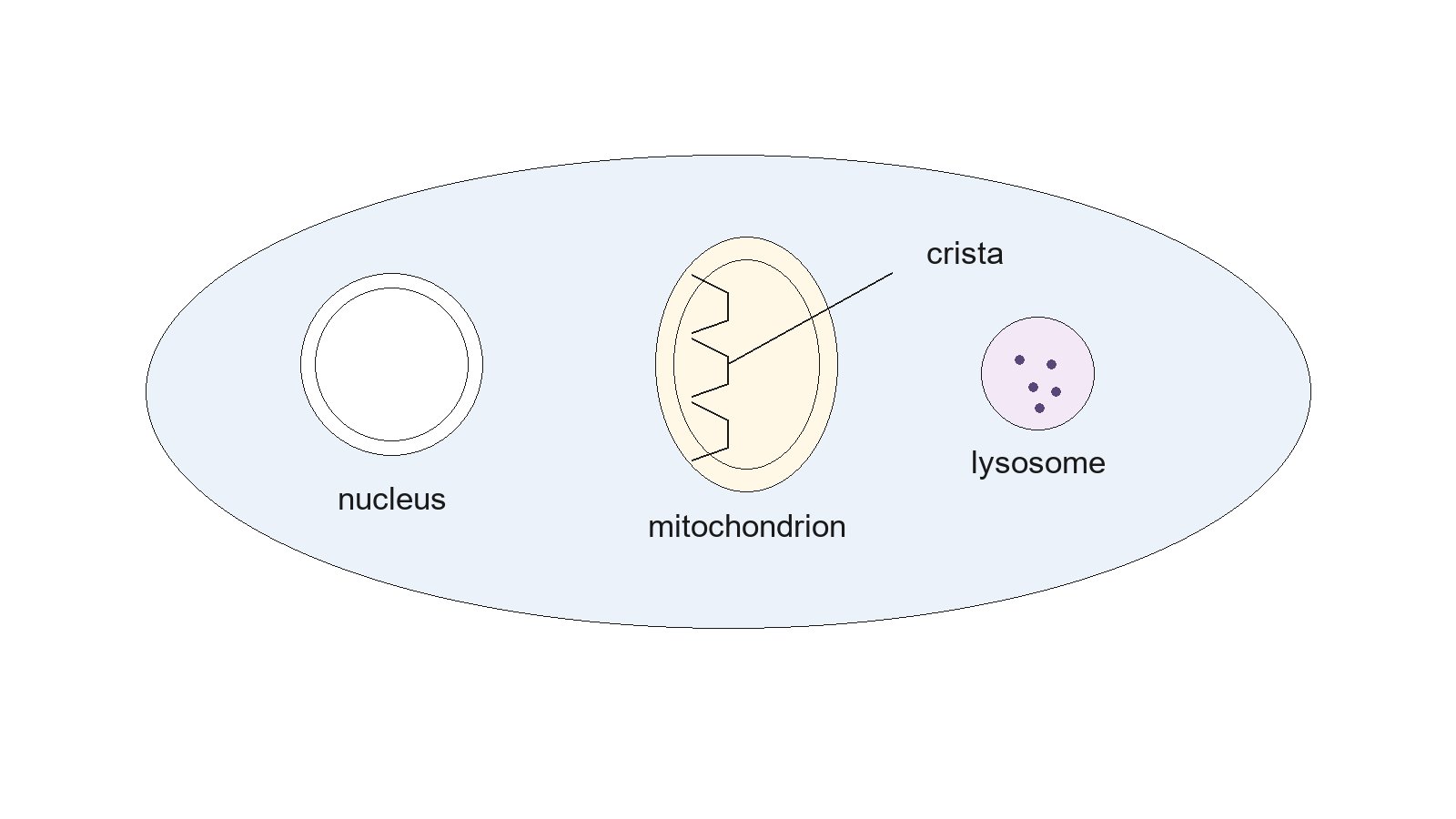
The nucleus, the mitochondrion, and the lysosome are separate membrane-bound compartments. The crista label points to a fold of the inner mitochondrial membrane.
2.9.B
Why internal membranes help
Internal membranes help eukaryotic cells in two ways. They minimize competing interactions, because substrates and enzymes that would interfere with each other are kept on opposite sides of a membrane. And they increase the surface area where reactions can occur. Lysosomal enzymes digesting macromolecules, kept away from the enzymes of the cytosol, is the competing-interaction case. The fold case is the mitochondrion.
Cristae are the folds of the inner mitochondrial membrane. Folding packs more membrane into the same organelle, which gives more room for the membrane-embedded machinery that makes ATP. Spread those folds out into a smooth inner membrane of smaller area and the capacity for that membrane-bound ATP production falls. Chloroplasts use the same idea: internal membrane is stacked so photosynthetic reactions have more surface. The chemistry of respiration and photosynthesis is a later unit. What this topic asks is why the membranes are there: separation, and area.
Key points
- Eukaryotic membranes and membrane-bound organelles compartmentalize metabolic processes and specific enzymatic reactions.
- The nucleus, mitochondria, lysosomes, and chloroplasts are membrane-bound compartments.
- Separation minimizes competing interactions. Lysosomal enzymes stay out of the cytosol.
- Internal membranes also increase the surface area where reactions can occur.
- Cristae are folds of the mitochondrial inner membrane and add area for membrane-bound ATP production.
- Less inner-membrane area means less capacity for those membrane-bound reactions.
- Chloroplast internal membranes add area for photosynthesis in the same way.