Question 1 of 5
(a) Define compartmentalization in eukaryotic cells. (b) Give three examples of membrane-bound organelles. (c) State one metabolic advantage of separating reactions.
Responses receive AI feedback against a rubric after submission. Scores are practice estimates.
(a) Define compartmentalization in eukaryotic cells. (b) Give three examples of membrane-bound organelles. (c) State one metabolic advantage of separating reactions.
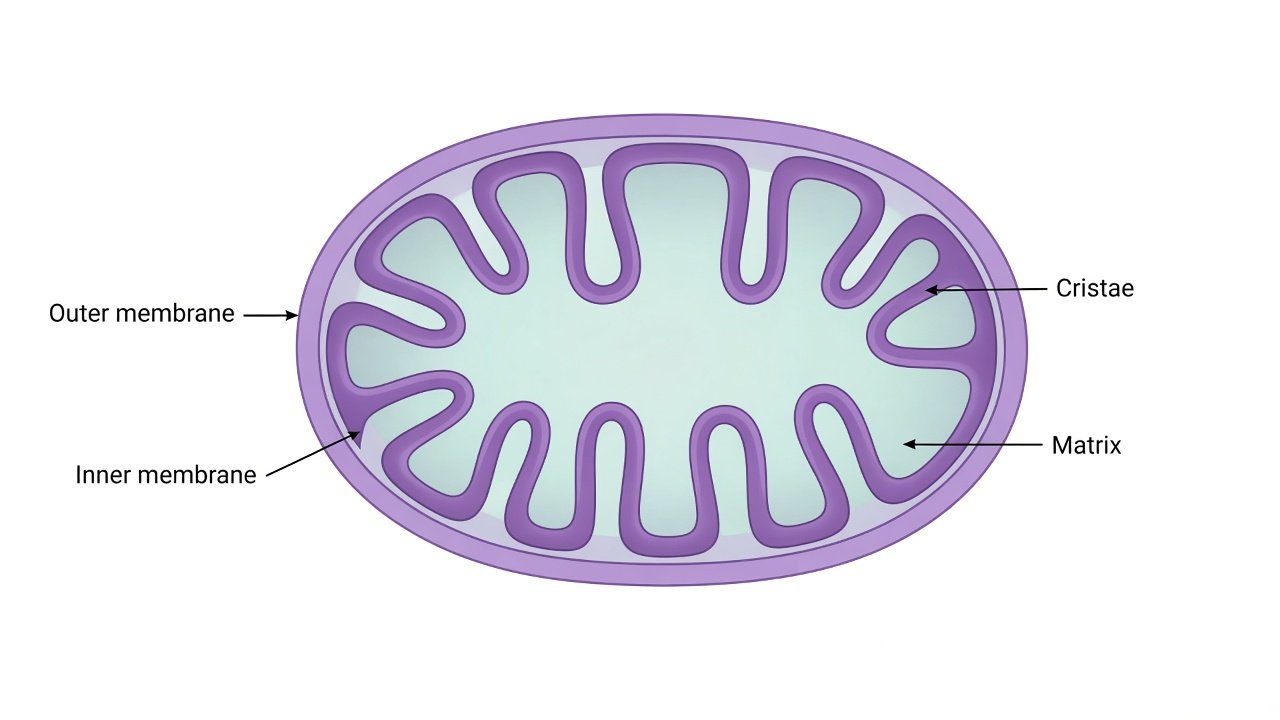
Using the mitochondrion figure, (a) identify outer vs inner membrane, (b) explain how folds relate to compartmental surface area, and (c) relate compartments to different metabolic reactions of respiration.
Compare the nucleus and a lysosome as compartments. (a) Shared feature. (b) Contrast primary contents/functions. (c) Explain why both illustrate 2.9.A.
(a) State two ways internal membranes help eukaryotic function per CED 2.9.B. (b) Give one example of increased surface area. (c) Give one example of minimized competing interactions.
Predict the effect of unfolding all mitochondrial cristae into a smooth inner membrane of smaller area. (a) Surface area change. (b) Likely effect on membrane-associated ATP production capacity. (c) Link to 2.9.B.