Cell Compartmentalization MCQ Practice

Question 1 of 10

Eukaryotic cells differ from typical prokaryotes in having

  1. A. membrane-bound organelles that compartmentalize metabolism
  2. B. no plasma membrane
  3. C. no ribosomes of any kind
  4. D. cellulose cytosol only

Question 2 of 10

Specific enzymatic reactions can be localized because

  1. A. enzymes cannot be near membranes
  2. B. compartments do not exist in eukaryotes
  3. C. membrane-bound organelles create specialized reaction environments
  4. D. all reactions must occur in the cell wall

Question 3 of 10

The nuclear envelope is an example of

  1. A. a nonmembranous ribosome
  2. B. a membrane that helps compartmentalize eukaryotic genetic processes
  3. C. a structure absent in all eukaryotes
  4. D. the only membrane prokaryotes always have internally as a nucleus

Question 4 of 10

In the mitochondrion figure, the matrix is
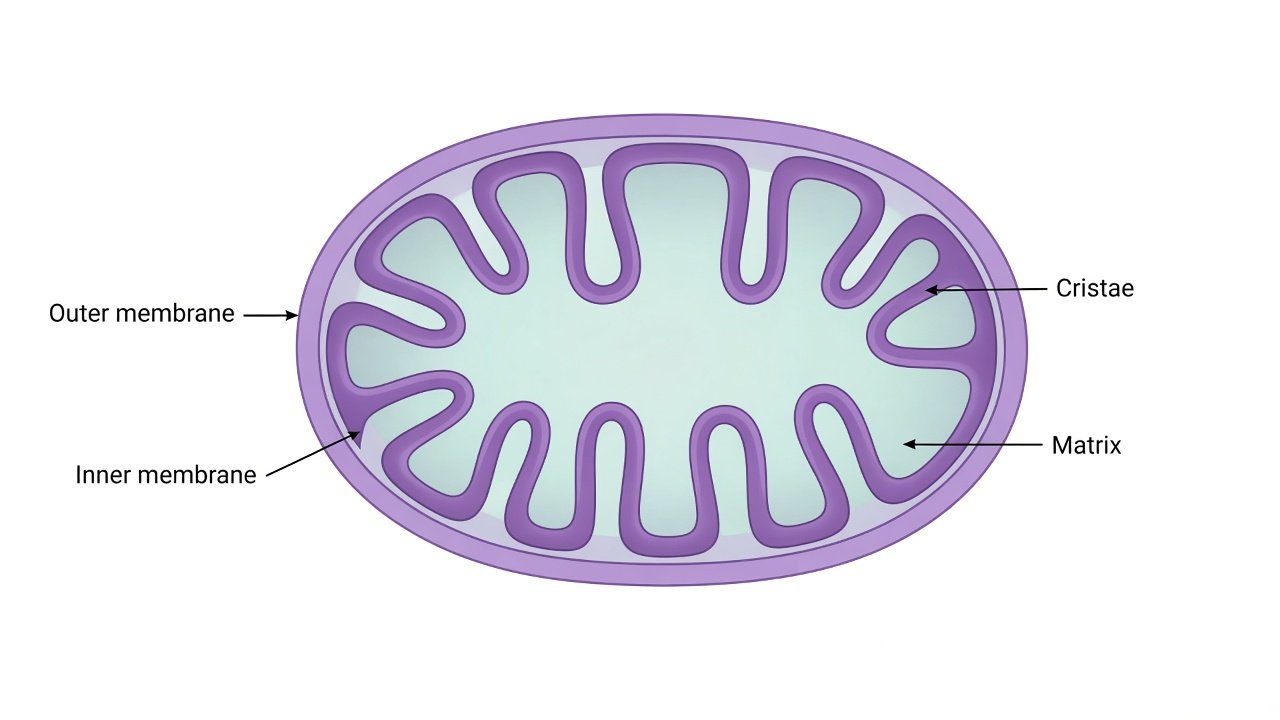
Mitochondrion cross-section with outer membrane, folded inner membrane (cristae), and matrix labeled.
  1. A. outside the outer membrane in the cytosol
  2. B. a ribosome
  3. C. the cell wall
  4. D. an internal compartment enclosed by the inner membrane

Question 5 of 10

Protein folding and chemical modification of secretory cargo occur inside the lumen of the endomembrane system rather than freely throughout the cytosol. This is an example of

  1. A. membrane-bound compartmentalization of specialized processing steps
  2. B. free-floating nucleic acids replacing organelles
  3. C. aquaporin-only metabolism with no membranes
  4. D. a process that occurs only in prokaryotes lacking ER/Golgi

Question 6 of 10

Which claim about Cell Q in the table is best?

Cell Features
Q Nucleus, mitochondria, ER, Golgi present
  1. A. It cannot compartmentalize reactions
  2. B. It lacks membranes entirely
  3. C. Its membrane-bound organelles can partition distinct enzymatic processes
  4. D. Ribosomes are its only compartments with bilayers

Question 7 of 10

Increasing membrane surface area inside a cell helps because

  1. A. reactions never occur on membranes
  2. B. more area is available where reactions can occur
  3. C. volume must always decrease to zero
  4. D. DNA leaves the cell

Question 8 of 10

Minimizing competing interactions means

  1. A. keeping incompatible processes in separate compartments
  2. B. mixing all enzymes into one uncontrolled cytosol ideally
  3. C. removing all membranes
  4. D. stopping all metabolism

Question 9 of 10

Which change would most directly reduce reaction surface area in mitochondria?

  1. A. Adding more cristae folds
  2. B. Expanding thylakoid stacks in a chloroplast (different organelle)
  3. C. Smoothing/losing cristae folds
  4. D. Increasing inner membrane folding

Question 10 of 10

ER membrane networks support function partly by

  1. A. eliminating all surface area
  2. B. preventing any protein synthesis ever
  3. C. being nonmembranous
  4. D. providing extensive membrane surface and separated spaces for processes