Cell Compartmentalization MCQ Practice

Question 1 of 10

In eukaryotic cells, membranes and membrane-bound organelles

  1. A. prevent all metabolism
  2. B. compartmentalize intracellular metabolic processes and specific enzymatic reactions
  3. C. are absent by definition
  4. D. replace the need for DNA

Question 2 of 10

Which structures are membrane-bound compartments of eukaryotic cells?

  1. A. Mitochondria, chloroplasts, ER, Golgi, lysosomes, and nucleus (nuclear envelope)
  2. B. Only ribosomes
  3. C. Only cellulose fibers
  4. D. Only free DNA in the cytosol with no membranes

Question 3 of 10

Compartmentalization allows different reactions to occur

  1. A. only outside the organism
  2. B. without any enzymes
  3. C. in specialized membrane-bound spaces within one cell
  4. D. only in viruses

Question 4 of 10

The mitochondrion figure illustrates compartmentalization because
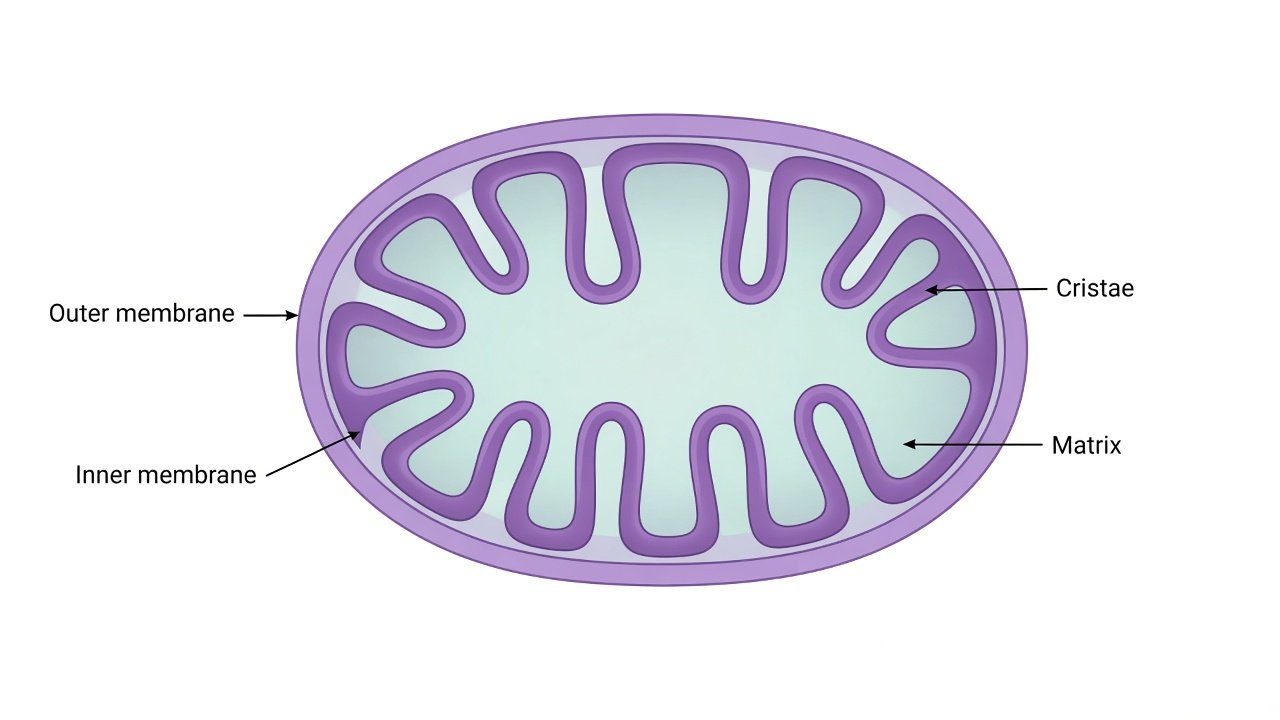
Mitochondrion cross-section with outer membrane, folded inner membrane (cristae), and matrix labeled.
  1. A. it lacks membranes
  2. B. it is a ribosome
  3. C. it shows only a single continuous aqueous space with no separations
  4. D. double membranes create distinct regions such as intermembrane space and matrix

Question 5 of 10

Lysosomes compartmentalize hydrolytic enzymes so that

  1. A. digestion can occur without freely destroying the entire cytosol unchecked
  2. B. photosynthesis happens in animal lysosomes
  3. C. DNA replication is catalyzed by cellulose
  4. D. ribosomes become membrane-bound organelles

Question 6 of 10

The table lists cell types. Which best matches eukaryotic compartmentalization?

Cell Description
P Claims organelles but no internal membranes
Q Multiple membrane-bound organelles
R Wall only, no plasma membrane
S Ribosomes called membrane-bound
  1. A. Cell P — no internal membranes, many membrane-bound organelles
  2. B. Cell Q — multiple membrane-bound organelles partitioning functions
  3. C. Cell R — only cell wall, no plasma membrane, many nuclei membranes
  4. D. Cell S — ribosomes are the only membrane-bound organelles

Question 7 of 10

Internal membranes facilitate cellular processes by

  1. A. maximizing competing interactions among all enzymes in one soup
  2. B. decreasing surface area available for reactions
  3. C. minimizing competing interactions and increasing surface area where reactions can occur
  4. D. eliminating all enzymes

Question 8 of 10

Cristae increase mitochondrial inner-membrane area, which

  1. A. provides more surface for membrane-associated reactions
  2. B. removes the matrix
  3. C. stops ATP formation by law
  4. D. converts mitochondria into vacuoles

Question 9 of 10

Separating hydrolytic enzymes in lysosomes from cytosolic metabolism is an example of

  1. A. increasing competing interactions
  2. B. minimizing competing/harmful interactions via compartmentalization
  3. C. removing membranes from eukaryotes
  4. D. prokaryotic lack of any internal structure

Question 10 of 10

Thylakoid membranes in chloroplasts increase

  1. A. the need to abolish photosynthesis
  2. B. nuclear pore size only
  3. C. cytosolic DNA amount
  4. D. surface area for light-reaction associated processes