Question 1 of 10
Metabolic energy for active transport often comes from
- A. ATP
- B. cellulose in animal cytosol
- C. free nitrogen gas alone
- D. removing the membrane
Metabolic energy for active transport often comes from
Without membrane proteins, active transport of ions would
Maintenance of membrane potential depends in part on
In the figure, three Na+ leaving while two K+ enter illustrates
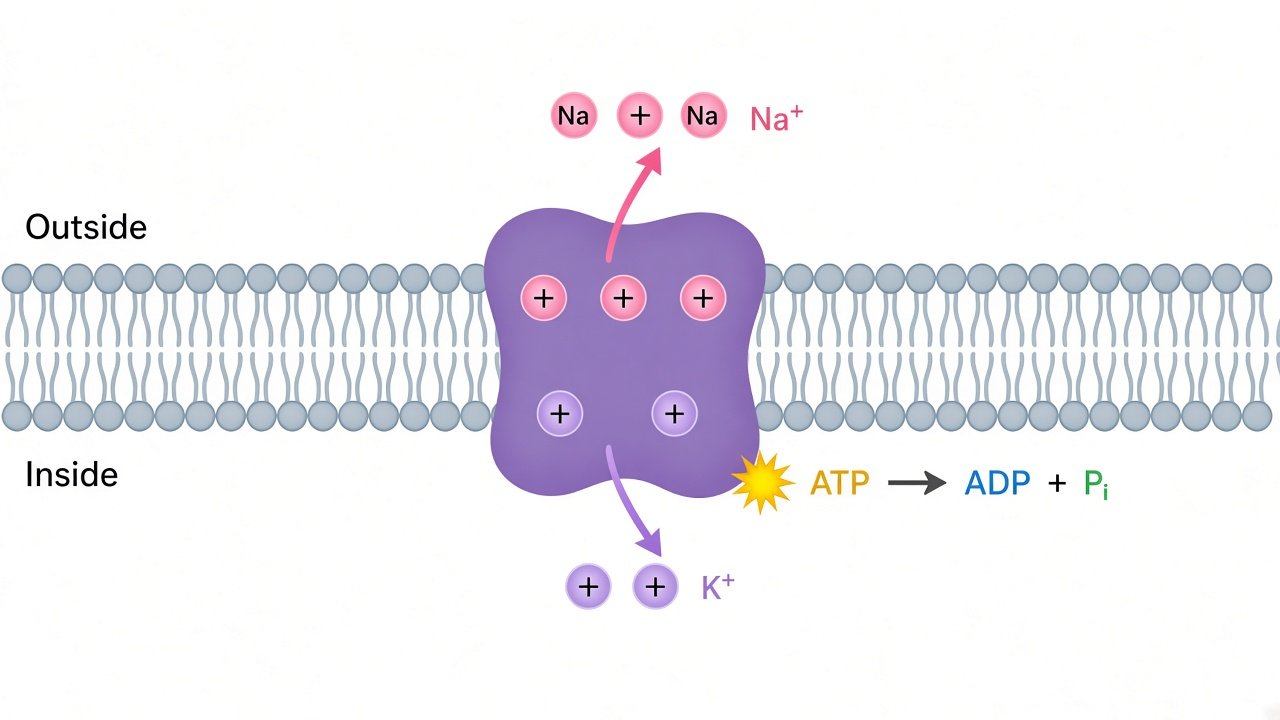
Active transport can move molecules
Electrochemical gradients across membranes store
Ouabain-like inhibition of Na+/K+ ATPase would be expected to
Which statement is correct?
The table compares transport types. Which active-transport row is accurate?
| Feature | Active transport |
|---|---|
| Energy | Metabolic (e.g., ATP) |
| Proteins | Necessary |
| Gradient | Can be against |
Processes that allow ions and other molecules to move across membranes include active transport that