Torque FRQ Practice

Responses receive AI feedback against a rubric after submission. Scores are practice estimates.

Question 1 of 5

Two equal and opposite vertical forces of magnitude F act at the ends of a horizontal rod of length L: upward at the left and downward at the right. (a) Find their net force. (b) Find their combined torque magnitude about the left end. (c) Find it about the midpoint and explain the comparison.
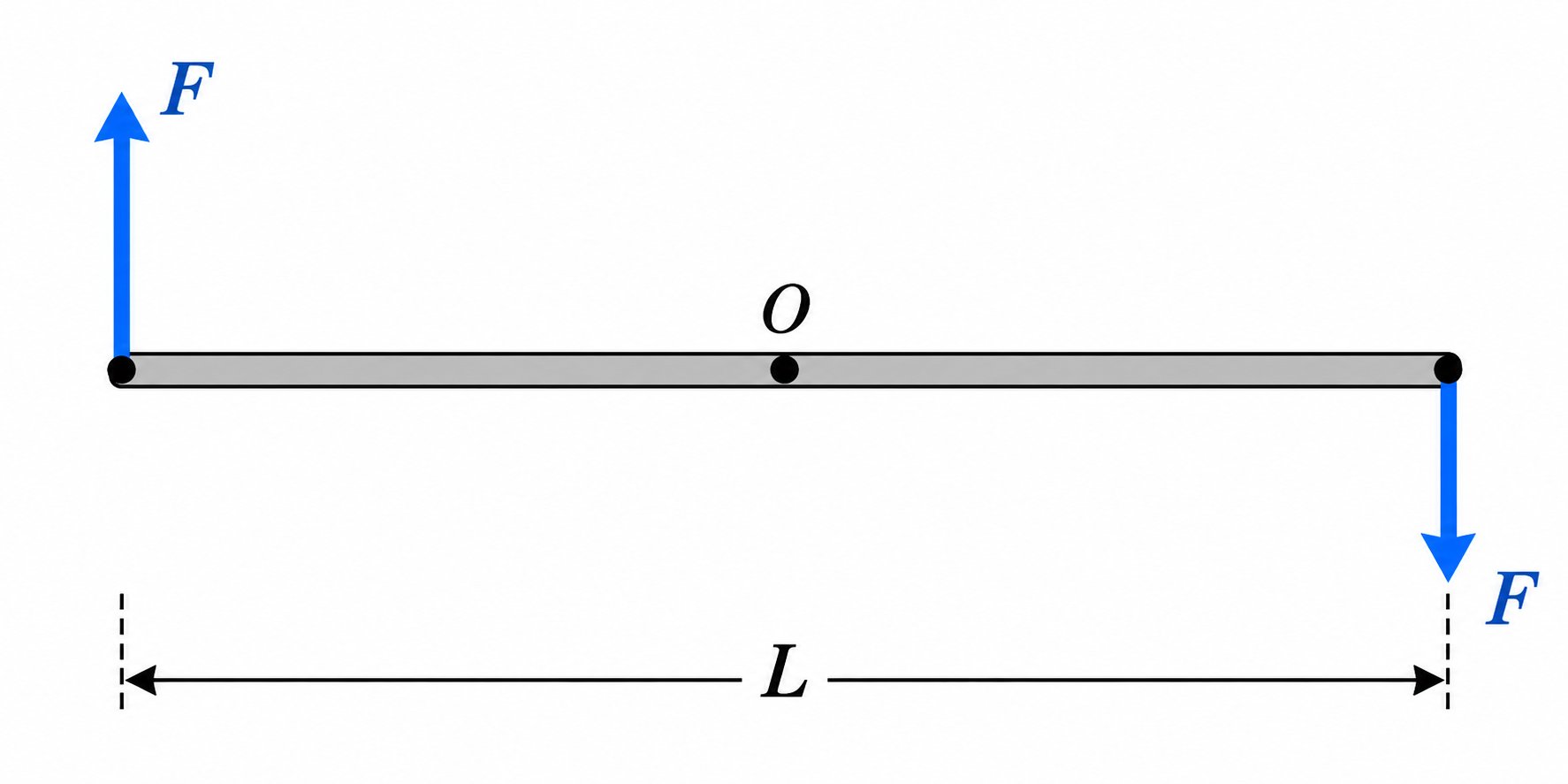
A horizontal rod of length L has force F upward at its left end and force F downward at its right end; O marks its midpoint.

Schematic; dimensions and force-arrow lengths are not to scale.
Question 2 of 5

A rod is held at an angle above the horizontal, pivoted at its lower end. A vertical downward force acts at its upper end. (a) Identify the lever arm geometrically. (b) Explain how the torque changes as the rod becomes vertical while its length and force stay fixed. (c) Explain why the full rod length is generally not the lever arm.

Question 3 of 5

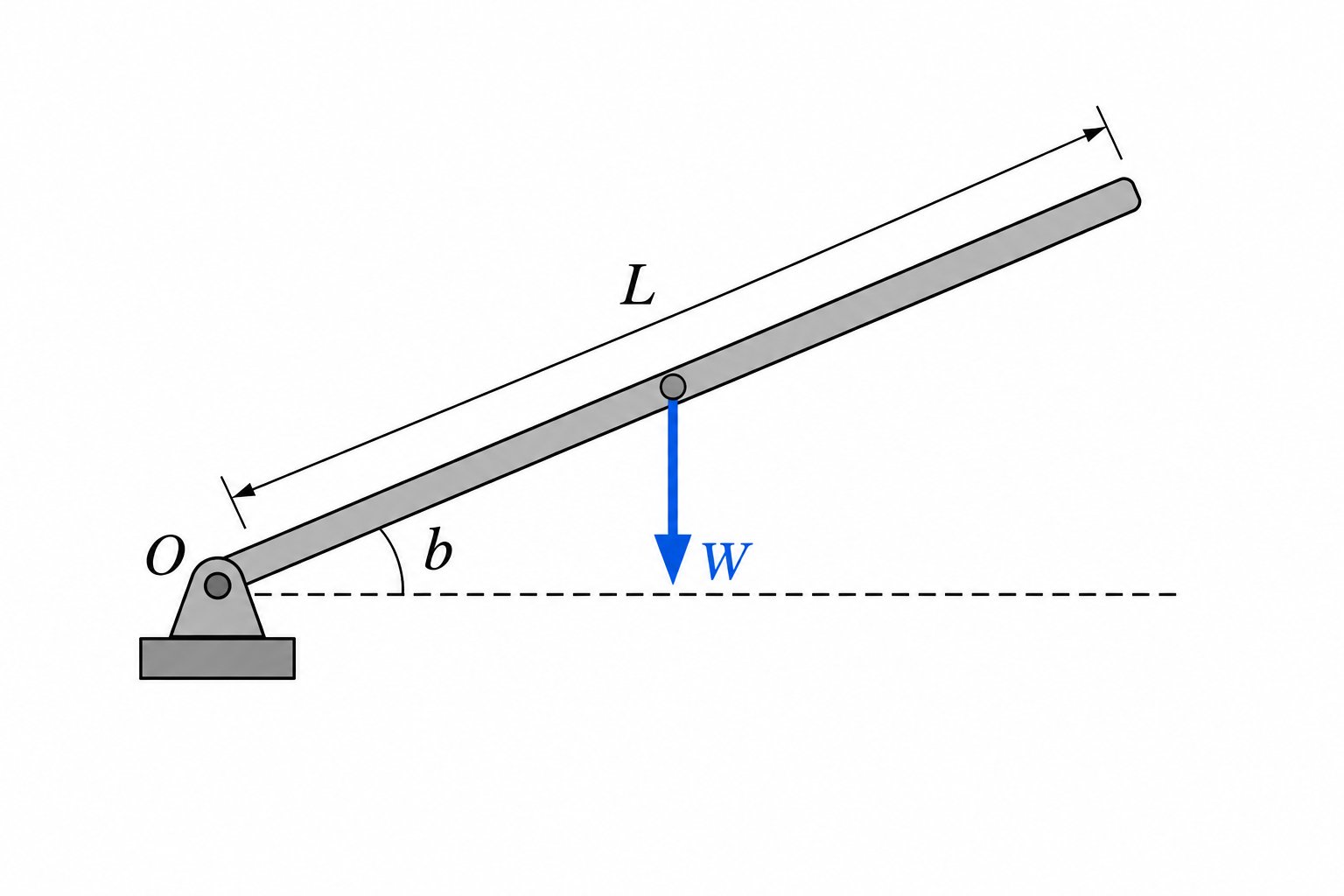
A uniform rod of length L and weight W extends upward and rightward at an angle b, between 0 and 90 degrees, above the horizontal and is pivoted at its lower end. (a) Derive the gravitational torque magnitude. (b) Evaluate it at b=60°. (c) Compare with the horizontal rod.

A rod of length L extends upward and rightward from pivot O at angle b above horizontal, with weight W downward at its midpoint.

Schematic; dimensions and force-arrow lengths are not to scale.

Question 4 of 5

A student measures the force needed to produce a fixed torque using a wrench at several perpendicular grip distances d. (a) Derive the expected dependence of F on d. (b) State a graph that should be linear and what its slope means. (c) Explain the effect of pulling at an angle less than 90° to the wrench while treating the pull as perpendicular.

Question 5 of 5

A freely supported rigid plate has several forces acting on it. A student says that identifying clockwise and counterclockwise arrows in a diagram is enough to compare their torques. (a) Identify two additional pieces of information needed. (b) Give an example in which the smaller force has the larger torque. (c) State how to mark a diagram so the comparison can be checked.