Cellular Respiration MCQ Practice

Question 1 of 10

Cellular respiration uses energy from biological macromolecules primarily to synthesize

  1. A. ATP
  2. B. cellulose cell walls in animals
  3. C. helium gas
  4. D. only DNA primers

Question 2 of 10

In aerobic respiration, the terminal electron acceptor of the mitochondrial ETC is

  1. A. nitrogen gas
  2. B. oxygen
  3. C. glucose itself at the end of the chain
  4. D. starch

Question 3 of 10

Folding of the inner mitochondrial membrane (cristae) benefits ATP synthesis by
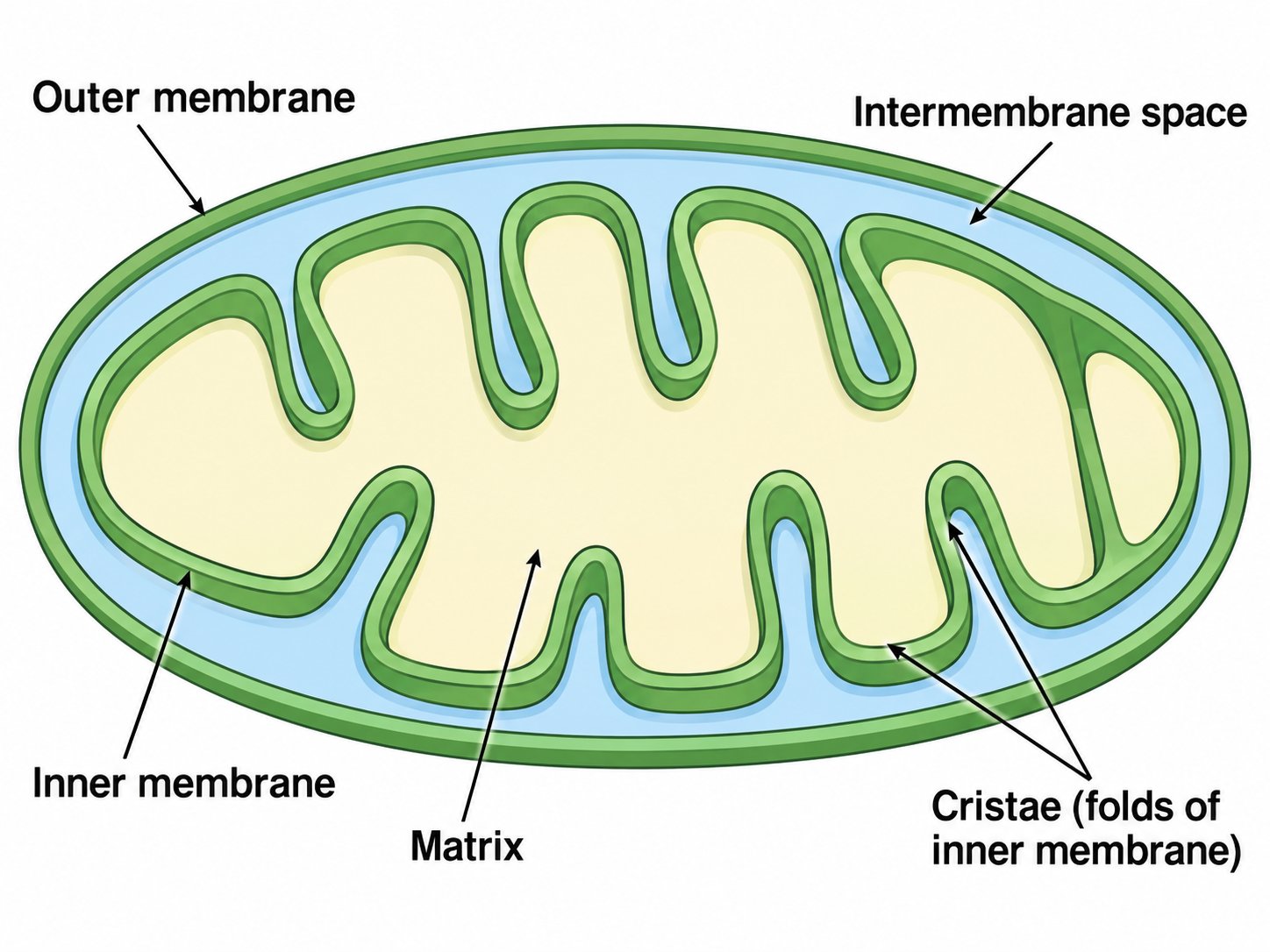
Mitochondrion with labeled cristae and matrix.
  1. A. decreasing surface area for ETC proteins
  2. B. increasing surface area available for more ATP synthesis machinery
  3. C. removing the need for oxygen forever
  4. D. converting the mitochondrion into a chloroplast

Question 4 of 10

During electron transport in mitochondria, the proton gradient has higher [H⁺]

  1. A. in the matrix than in the intermembrane space
  2. B. in the intermembrane space than in the matrix
  3. C. only inside the nucleus
  4. D. equally in all compartments with no gradient

Question 5 of 10

Oxidative phosphorylation refers to ATP formation driven by

  1. A. chemiosmotic proton flow through ATP synthase linked to electron transport
  2. B. only fermentation without membranes
  3. C. photons striking chlorophyll in animals
  4. D. direct combustion of oxygen with DNA

Question 6 of 10

Decoupling oxidative phosphorylation from electron transport can generate heat used by some endotherms to

  1. A. regulate body temperature
  2. B. build cell walls of cellulose
  3. C. replace oxygen with CO2 as terminal acceptor permanently
  4. D. memorize Krebs intermediates

Question 7 of 10

Glycolysis converts glucose energy into

  1. A. ATP, NADH, and pyruvate
  2. B. only O2 and starch
  3. C. chlorophyll and NADPH exclusively
  4. D. DNA and histones

Question 8 of 10

The Krebs (citric acid) cycle takes place in the

  1. A. mitochondrial matrix
  2. B. thylakoid lumen exclusively
  3. C. extracellular fluid of blood only
  4. D. middle of the cell wall

Question 9 of 10

Fermentation allows glycolysis to continue without oxygen by

  1. A. regenerating NAD⁺ while producing organic products such as alcohol or lactic acid
  2. B. creating a permanent proton gradient without membranes
  3. C. using sunlight as the glycolytic substrate
  4. D. requiring memorization of every glycolytic enzyme name

Question 10 of 10

Electrons extracted in glycolysis and the Krebs cycle are transferred by NADH and FADH₂ to the
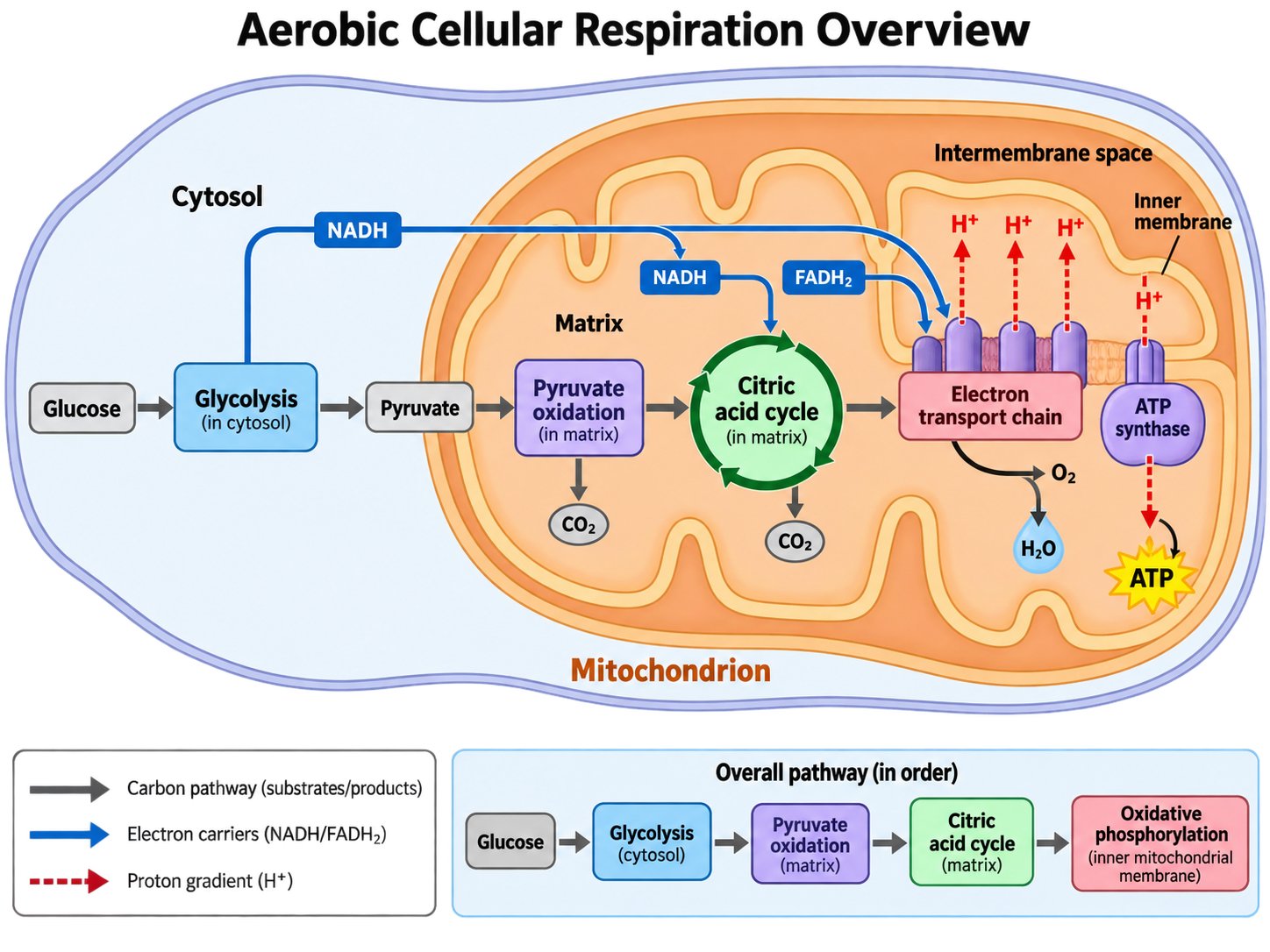
Overview of aerobic respiration pathway compartments.
  1. A. ETC in the inner mitochondrial membrane
  2. B. Calvin cycle stroma enzymes as electron donors to CO2 directly
  3. C. nuclear envelope for DNA replication only
  4. D. cell wall for structural support