Question 1 of 5
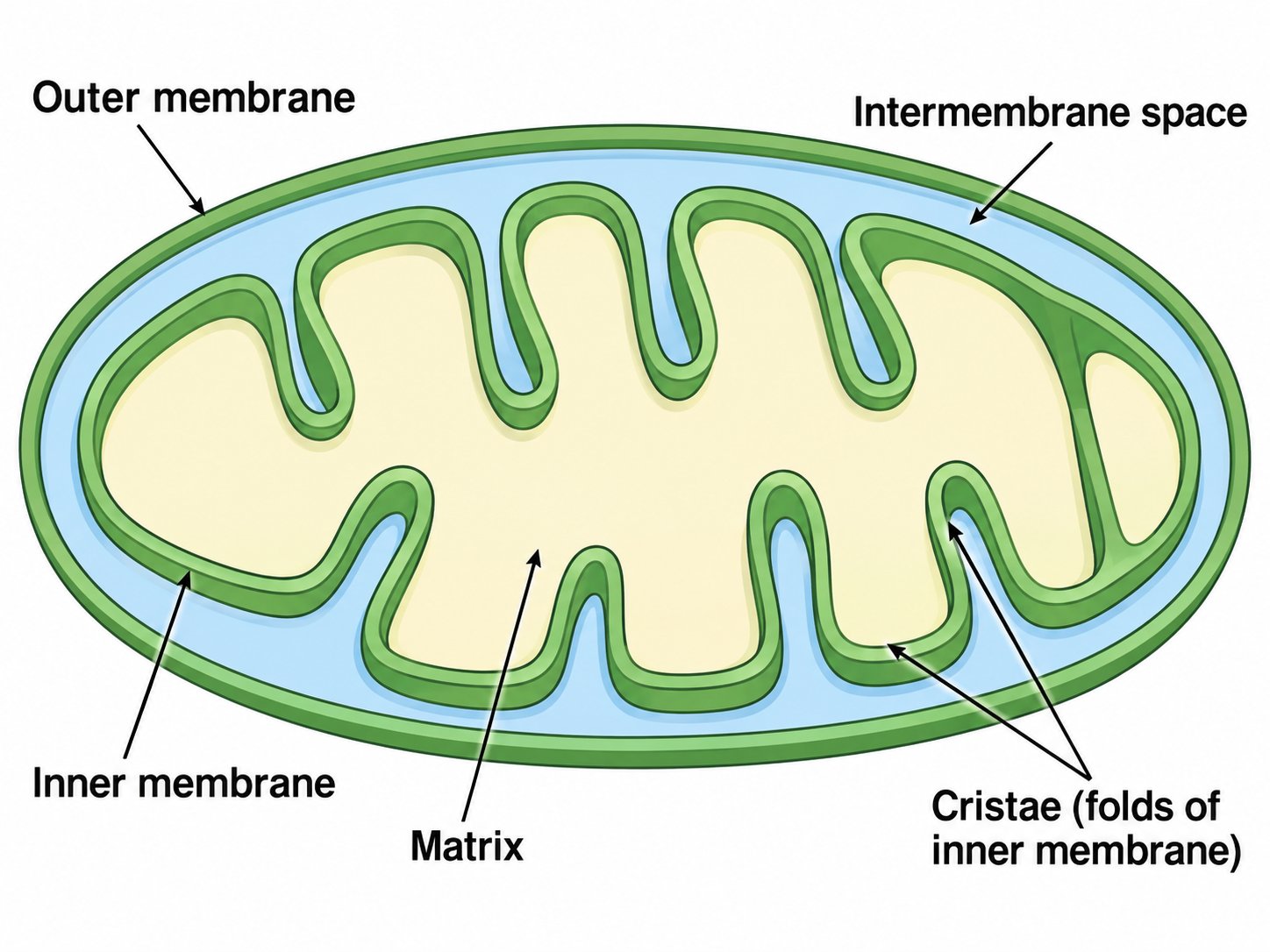
(a) State the main purpose of cellular respiration. (b) Identify the terminal electron acceptor in aerobic respiration. (c) Explain one advantage of inner-membrane folding.
Responses receive AI feedback against a rubric after submission. Scores are practice estimates.
(a) State the main purpose of cellular respiration. (b) Identify the terminal electron acceptor in aerobic respiration. (c) Explain one advantage of inner-membrane folding.
(a) Describe how the ETC helps establish a proton gradient. (b) Contrast [H⁺] in intermembrane space vs matrix. (c) Explain oxidative phosphorylation. (d) Note a CED exclusion about ETC carriers.
Brown adipose tissue can uncouple electron transport from ATP synthesis. (a) Predict ATP yield change. (b) Predict heat production change. (c) Relate to endotherm temperature regulation.
(a) List the major products of glycolysis named in the CED. (b) Describe where pyruvate is oxidized in eukaryotes. (c) State what the Krebs cycle releases regarding carbon.
Compare aerobic respiration and fermentation. (a) State what fermentation permits regarding glycolysis. (b) Name two fermentation product types from the CED. (c) Contrast ATP yield conceptually with aerobic respiration (no exact stoichiometry required). (d) State a CED exclusion about memorizing glycolysis/Krebs steps.