Question 1 of 5
(a) Describe the ETC’s role in oxidation–reduction. (b) Identify where the proton gradient forms in eukaryotic aerobic respiration. (c) Name the enzyme that makes ATP from the gradient.
Responses receive AI feedback against a rubric after submission. Scores are practice estimates.
(a) Describe the ETC’s role in oxidation–reduction. (b) Identify where the proton gradient forms in eukaryotic aerobic respiration. (c) Name the enzyme that makes ATP from the gradient.
Use the mitochondrion figure.
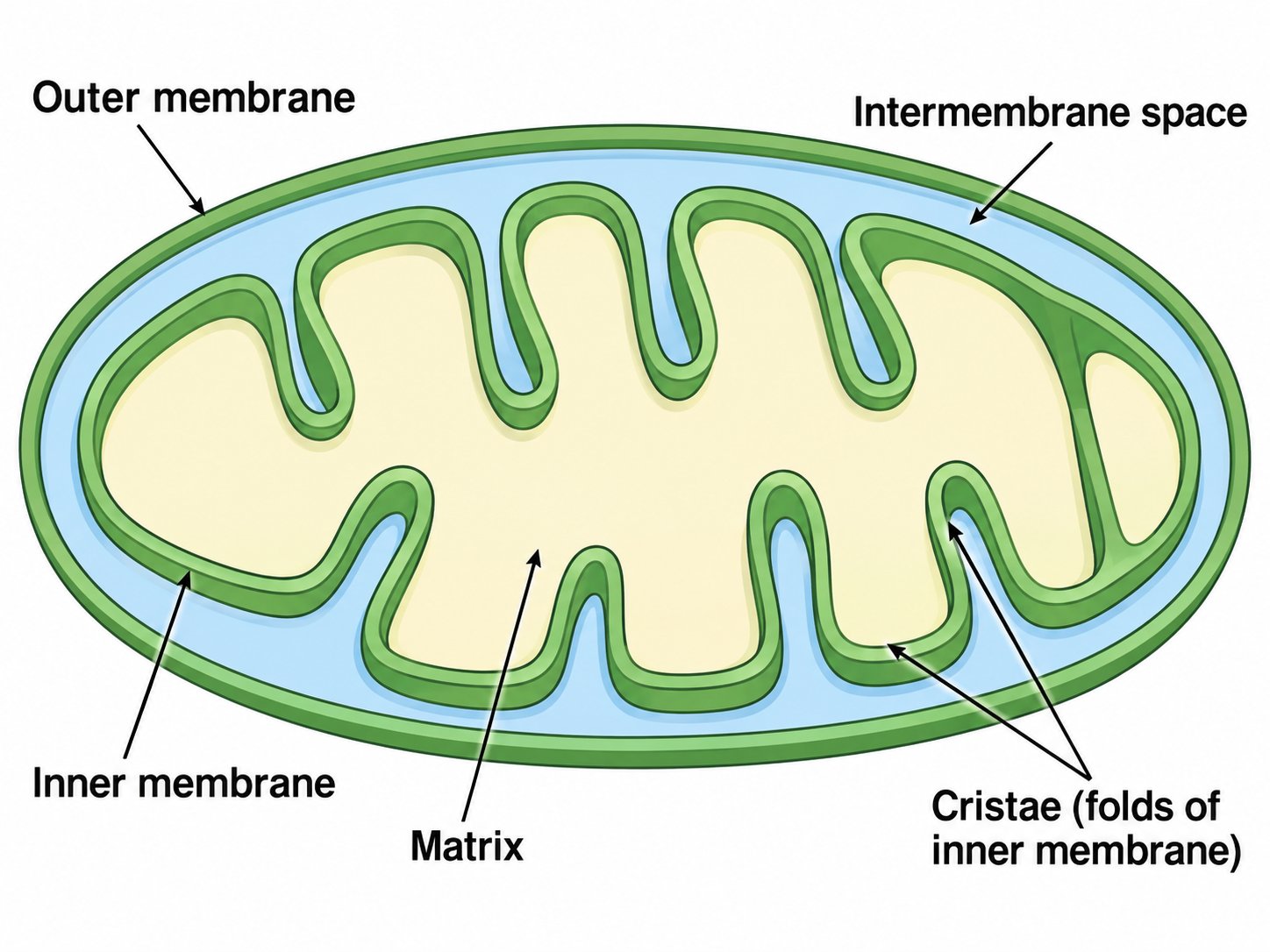
(a) Locate the matrix. (b) Locate the intermembrane space. (c) Explain how cristae support ATP production.
(a) Explain oxidative phosphorylation. (b) Explain how decoupling can produce heat. (c) Give the biological use of that heat in endotherms.
Follow carbon and electrons conceptually along the pathway figure.
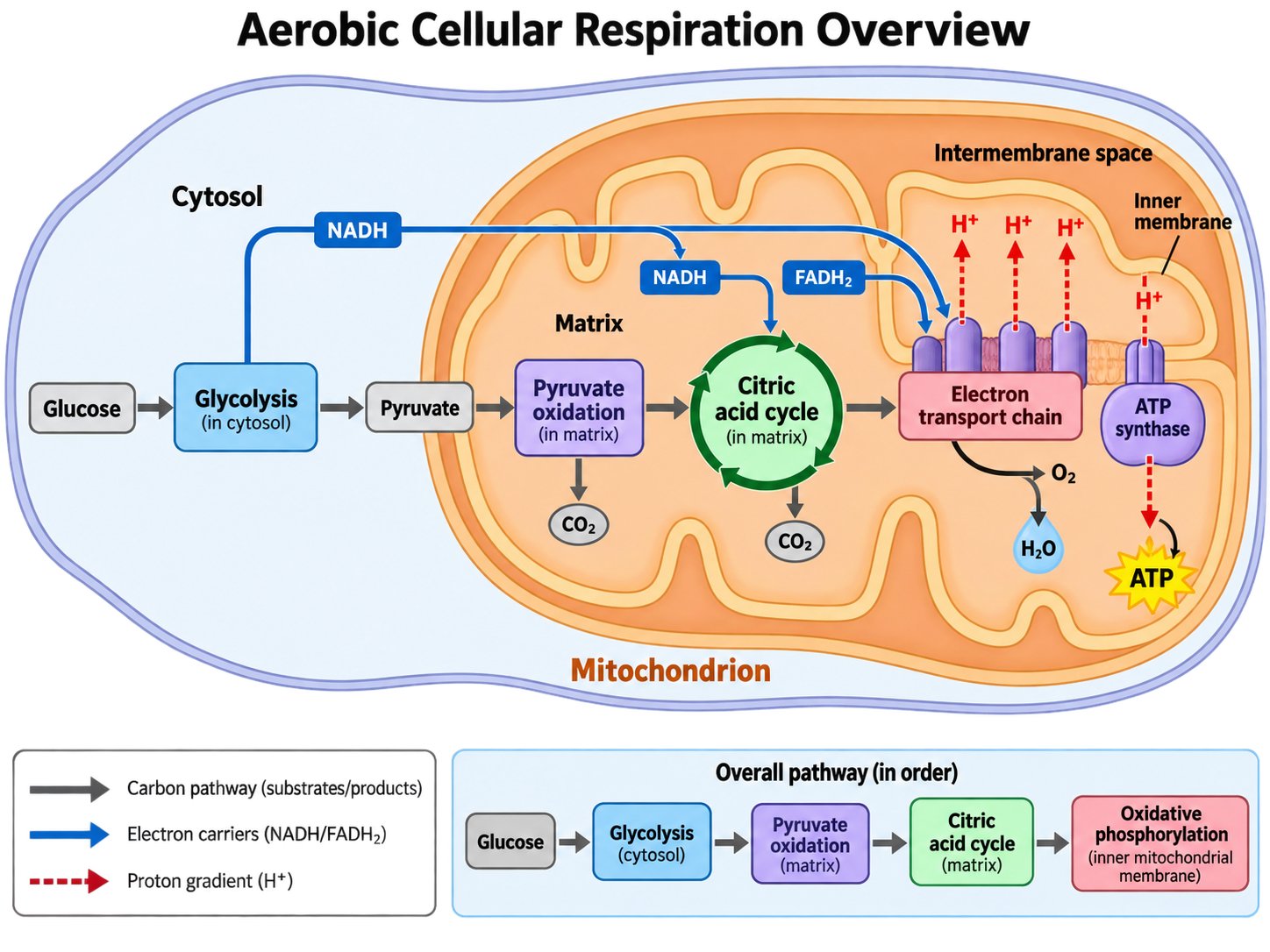
(a) State glycolysis location. (b) State Krebs cycle location. (c) State where the ETC is embedded in eukaryotes.
Muscle cells switch toward lactic acid fermentation during intense anaerobic effort. (a) Explain the benefit for glycolysis. (b) Identify the organic product. (c) Contrast with oxygen-rich conditions regarding the fate of pyruvate. (d) State why listing every glycolytic enzyme is not required.