Plasma Membrane FRQ Practice

Responses receive AI feedback against a rubric after submission. Scores are practice estimates.

Question 1 of 5

Describe phospholipid orientation in membranes. (a) Identify hydrophilic and hydrophobic parts. (b) State how each orients in a bilayer. (c) Explain how this arrangement helps maintain an internal environment distinct from the outside.
Question 2 of 5

Membrane proteins can be hydrophilic, hydrophobic, or both. (a) Explain where hydrophilic protein regions tend to be. (b) Explain where hydrophobic regions tend to be. (c) Predict how replacing many hydrophobic amino acids with charged ones in a transmembrane segment could affect embedding.

Question 3 of 5

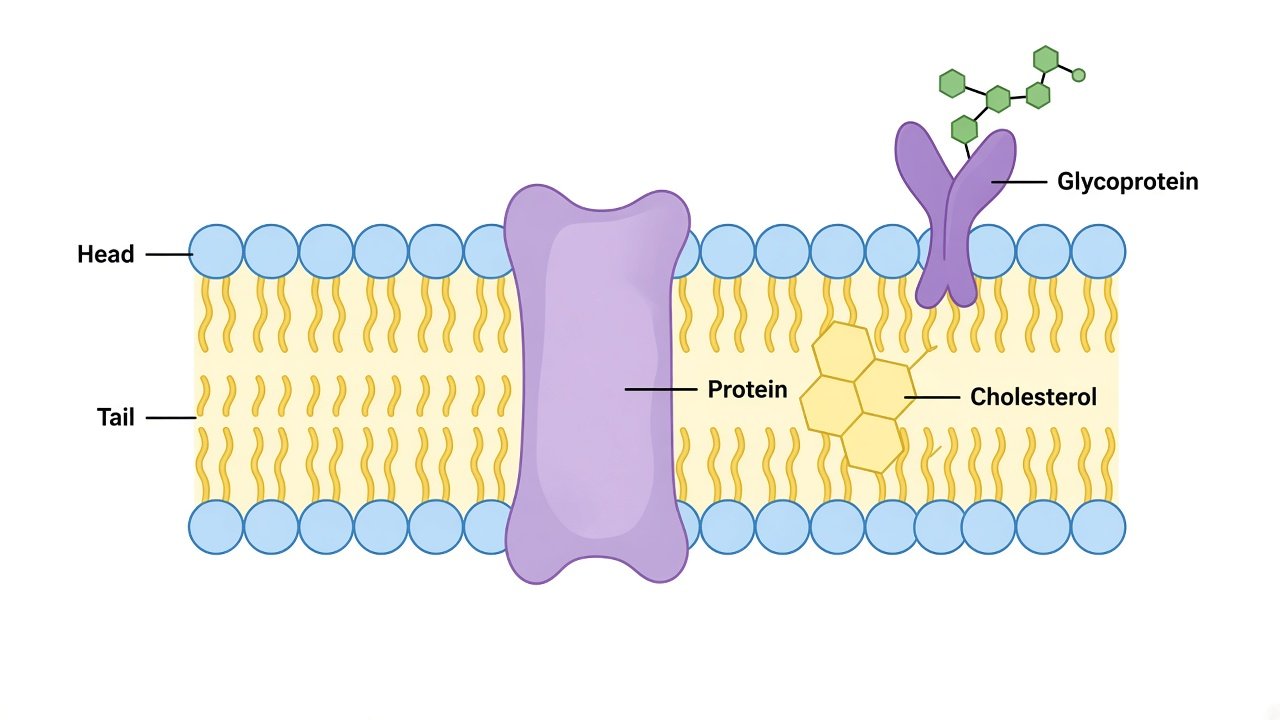
Using the membrane figure, (a) identify the cholesterol location relative to phospholipids, (b) describe what glycoprotein sugars face, and (c) explain why fatty acid tails are not labeled as facing the exterior water.

Plasma membrane cross-section with phospholipid heads and tails, transmembrane protein, cholesterol, and glycoprotein labeled.

Question 4 of 5

Define the fluid mosaic model. (a) List four classes of membrane components in the model. (b) Explain what “fluid” refers to. (c) Explain what “mosaic” refers to.

Question 5 of 5

A student claims membranes are static walls. Using the fluid mosaic model, (a) refute the claim, (b) cite the role of the phospholipid framework, and (c) explain why mobility matters for membrane function at a conceptual level.