Conservation of Angular Momentum FRQ Practice

Responses receive AI feedback against a rubric after submission. Scores are practice estimates.

Question 1 of 5

A student on a rotating stool has total inertia 6 kg m² and angular speed 2 rad/s. Pulling weights inward reduces the inertia to 3 kg m². External torque is negligible. (a) Find final speed. (b) Calculate initial and final kinetic energies. (c) Explain the energy change.
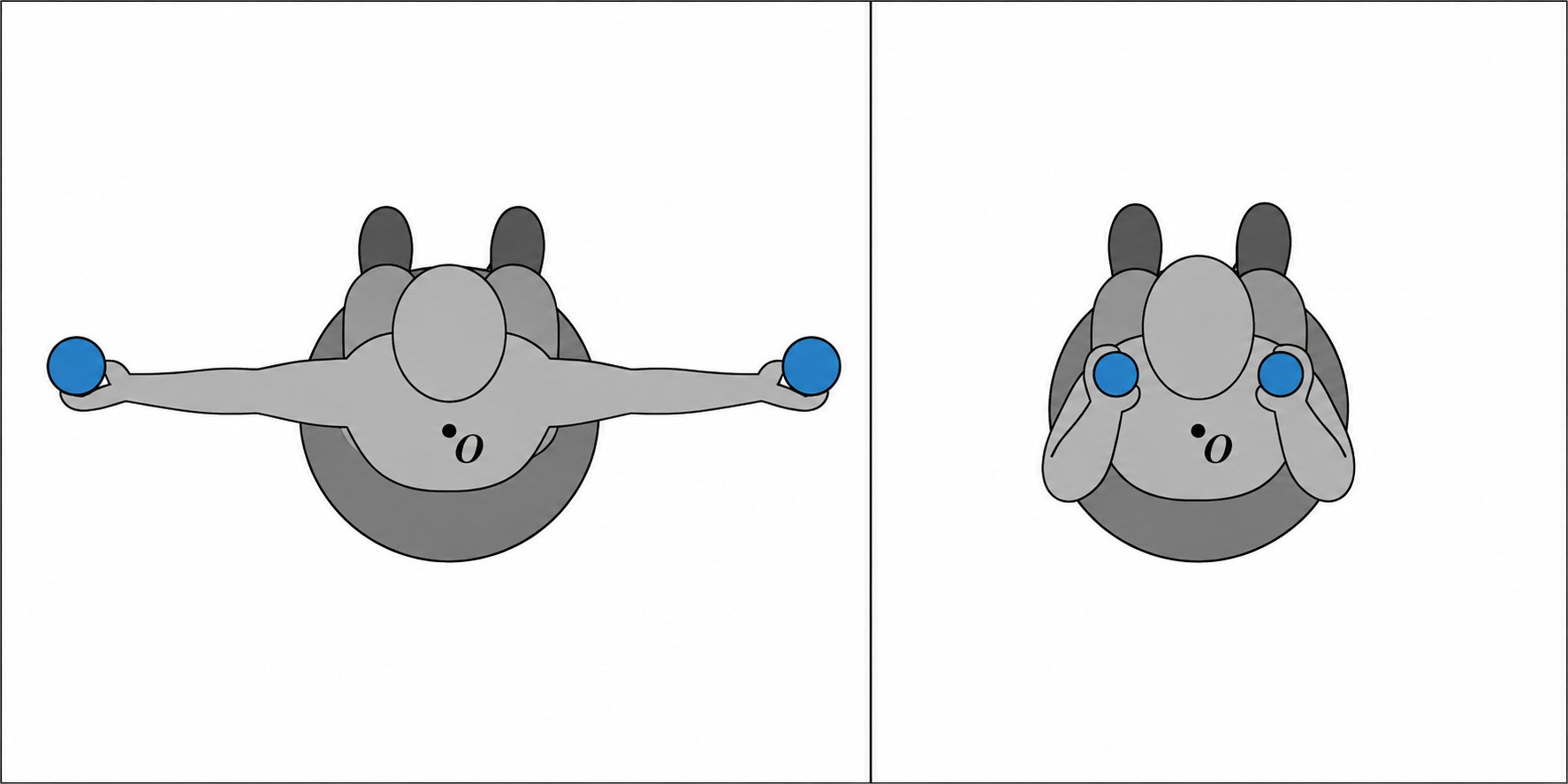
Overhead views show a student holding weights with arms extended and retracted.

Schematic; dimensions and force-arrow lengths are not to scale.
Question 2 of 5

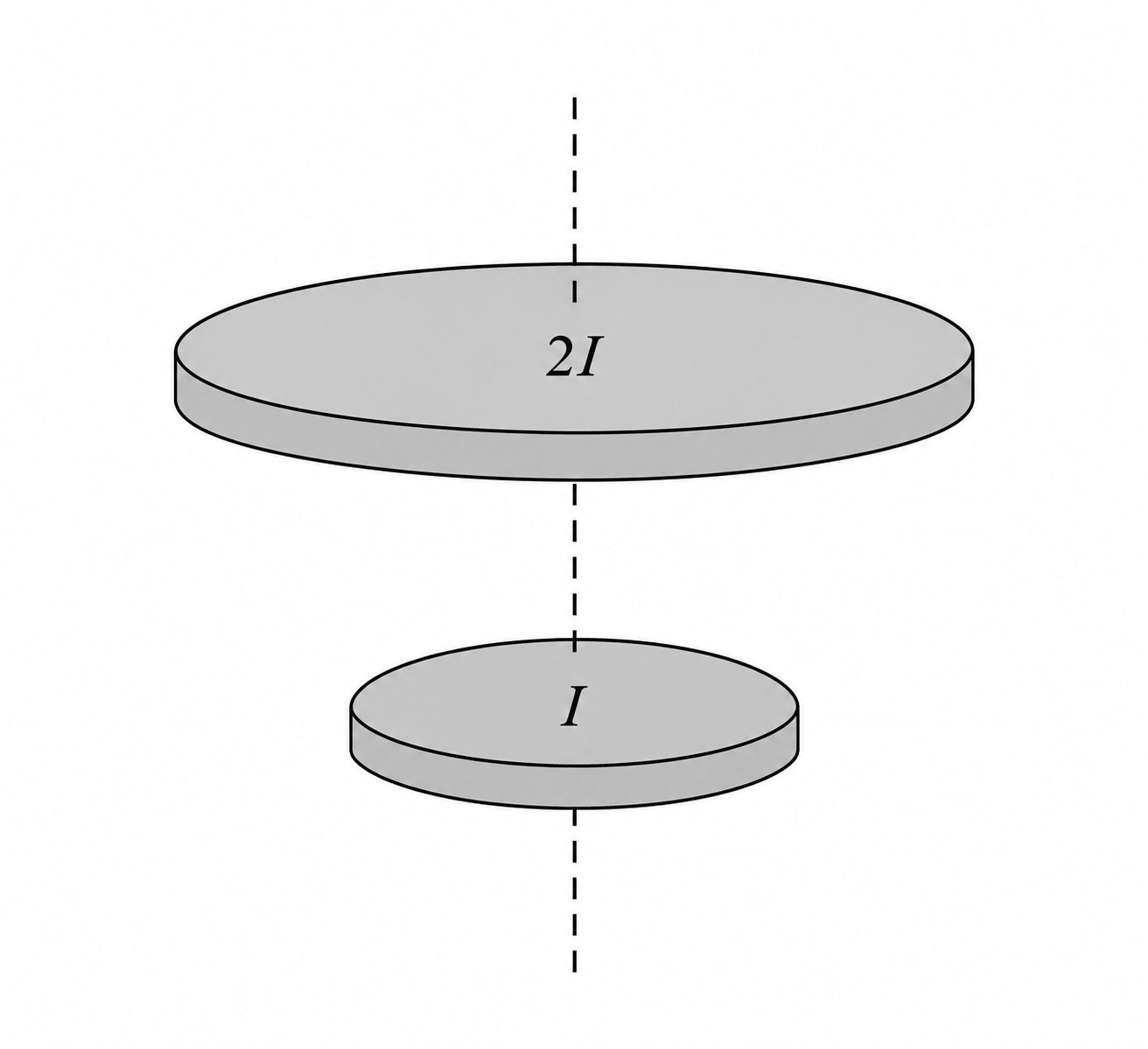
Coaxial disks of inertias I and 2I initially rotate at +3w and -w, respectively. They are brought into contact and reach one common angular velocity; external torque is negligible. (a) Find the common angular velocity. (b) Determine the fraction of initial rotational energy remaining. (c) Explain where the missing mechanical energy goes.

Coaxial disks labeled I and 2I are initially separated.

Schematic; dimensions and force-arrow lengths are not to scale.
Question 3 of 5

The table records inertia and angular speed before and after a rotating system changes shape. (a) Determine whether each trial is consistent with angular-momentum conservation. (b) For the inconsistent trial, find the net external angular impulse. (c) Explain why testing angular speed alone would be inadequate.

Trial I_i (kg m²) w_i (rad/s) I_f (kg m²) w_f (rad/s)
P 4 3 3 4
Q 5 2 2 4

Question 4 of 5

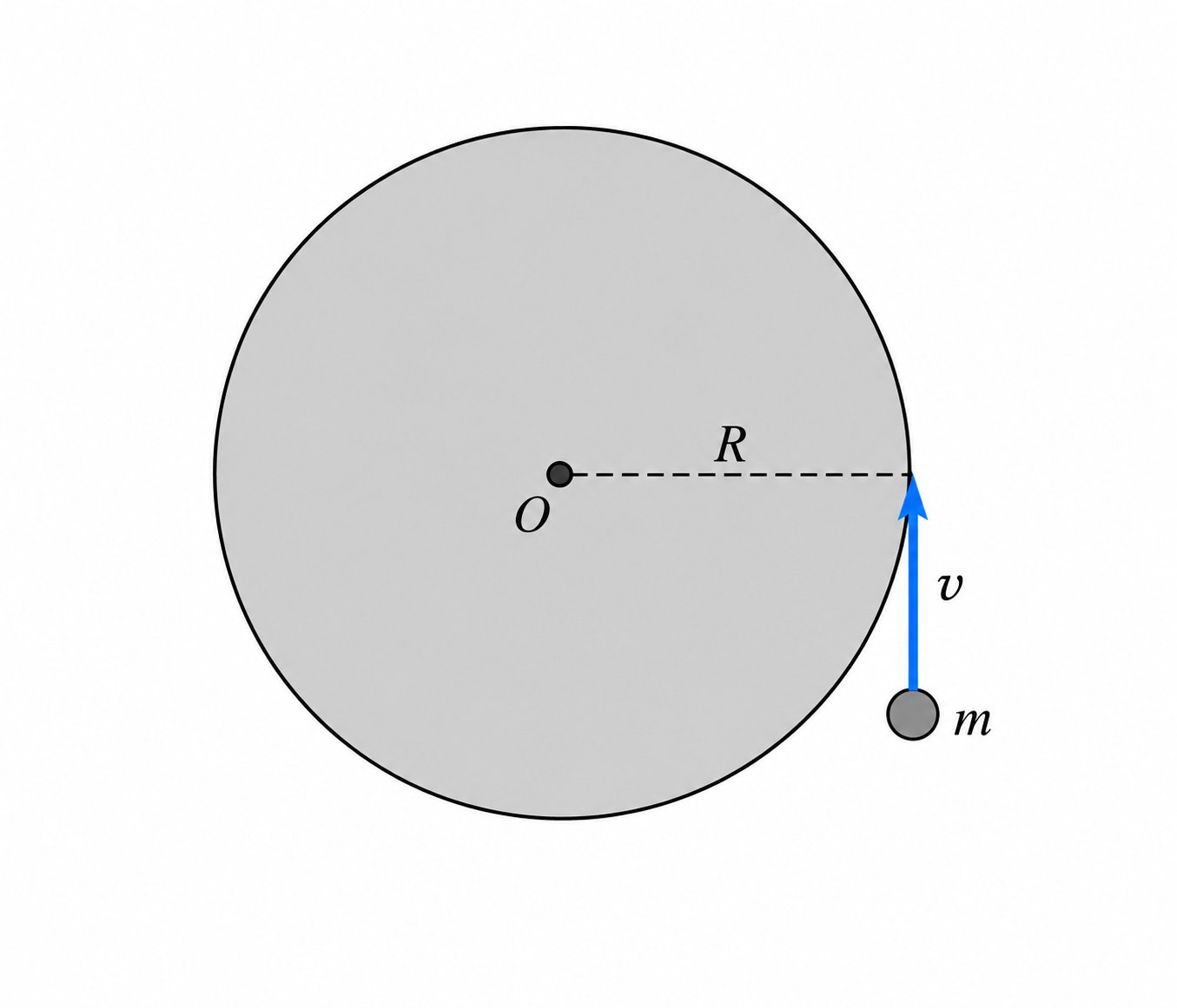
A small object of mass m approaches a horizontal freely turning platform tangentially at speed v and sticks to its rim, radius R from axle O. In the overhead view it moves upward toward the rightmost point on the rim. During the short collision, the axle force can be large but its torque about the axle is negligible. (a) Choose a system suitable for angular-momentum conservation. (b) Explain why platform angular momentum alone is not conserved. (c) Explain why total linear momentum need not be conserved for your chosen system.

An object m approaches the right rim tangentially with velocity v; the platform radius from O is R.

Schematic; dimensions and force-arrow lengths are not to scale.

Question 5 of 5

A rotor and a motor exchange torque while both are mounted on a freely turning support. Treat the rotor, motor housing, and support together as isolated about the vertical axle. (a) Predict the total angular-momentum change. (b) Explain how the rotor can gain angular momentum. (c) Predict the response of the rest of the system if everything starts from rest.