Biotechnology MCQ Practice

Question 1 of 10

Gel electrophoresis separates DNA fragments primarily by

  1. A. size and charge as fragments migrate in an electric field
  2. B. histone acetylation alone
  3. C. melting point of cellulose only
  4. D. ribosome sedimentation only

Question 2 of 10

DNA gel electrophoresis: wells at the negative end; smaller DNA fragments migrate farther toward the positive electrode.

In the figure, shorter DNA fragments typically

  1. A. are identical in position regardless of length
  2. B. migrate farther toward the positive electrode than longer fragments
  3. C. never leave the wells
  4. D. migrate only toward the negative electrode always as the longest bands

Question 3 of 10

PCR amplifies DNA by cycles of

  1. A. only gel staining
  2. B. only histone removal
  3. C. denaturation, primer annealing, and extension
  4. D. only conjugation

Question 4 of 10

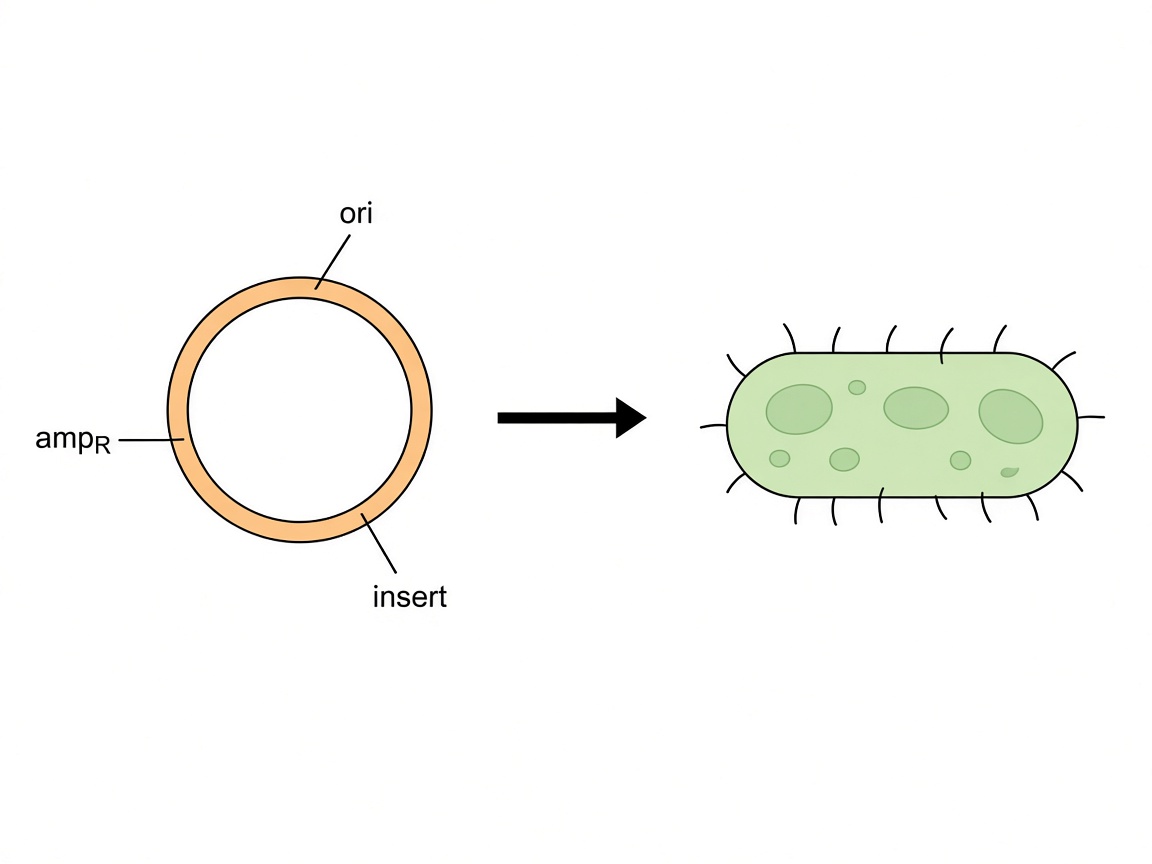
Circular plasmid with ori, ampR, and insert near a bacterium.

Bacterial transformation in this context means

  1. A. translating ampR into DNA
  2. B. removing all plasmids permanently
  3. C. scoring gels without DNA
  4. D. introducing foreign DNA into bacterial cells

Question 5 of 10

DNA sequencing determines

  1. A. the order of nucleotides in a DNA molecule
  2. B. only chromosome condensation state
  3. C. only the mass of ribosomes
  4. D. only operon inducer concentration

Question 6 of 10

Comparing DNA fingerprints from samples is useful because

  1. A. PCR never produces DNA
  2. B. sequence/pattern differences can identify or relate samples
  3. C. all genomes are identical always
  4. D. gels cannot separate DNA

Question 7 of 10

AP Biology excludes requiring

  1. A. knowing that gels separate by size/charge
  2. B. knowing PCR amplifies DNA
  3. C. deep procedural details of each engineering technique beyond the CED essentials
  4. D. knowing transformation introduces foreign DNA

Question 8 of 10

Amplified DNA fragments can be used to

  1. A. eliminate natural selection
  2. B. replace the need for any nucleotides
  3. C. synthesize cellulose from DNA
  4. D. help identify organisms or support phylogenetic comparisons

Question 9 of 10

A selectable marker such as ampR on a plasmid helps researchers

  1. A. identify cells that likely took up the plasmid
  2. B. run gels without electricity
  3. C. splice eukaryotic introns in vitro only
  4. D. sequence RNA without DNA

Question 10 of 10

Gene cloning allows

  1. A. destruction of all genetic information
  2. B. propagation of DNA fragments in host cells
  3. C. translation without ribosomes
  4. D. photosynthesis in animal cells