Biotechnology MCQ Practice

Question 1 of 10

During gel electrophoresis, DNA’s charge means fragments generally move toward

  1. A. magnetic north
  2. B. the center of the Earth
  3. C. the positive electrode
  4. D. the negative electrode only if DNA is uncharged

Question 2 of 10

Lane Fragment sizes (bp)
1 100, 400
2 400
3 100, 200, 400
DNA gel electrophoresis: wells at the negative end; smaller DNA fragments migrate farther toward the positive electrode.

Which lane should show the most bands?

  1. A. Lane 2 and only if voltage is zero
  2. B. Lane 2
  3. C. A lane with no DNA
  4. D. Lane 3

Question 3 of 10

Primer annealing in PCR requires

  1. A. cooling enough for primers to base-pair with template strands
  2. B. ligase sealing RNA only
  3. C. removing all magnesium forever
  4. D. boiling DNA into amino acids

Question 4 of 10

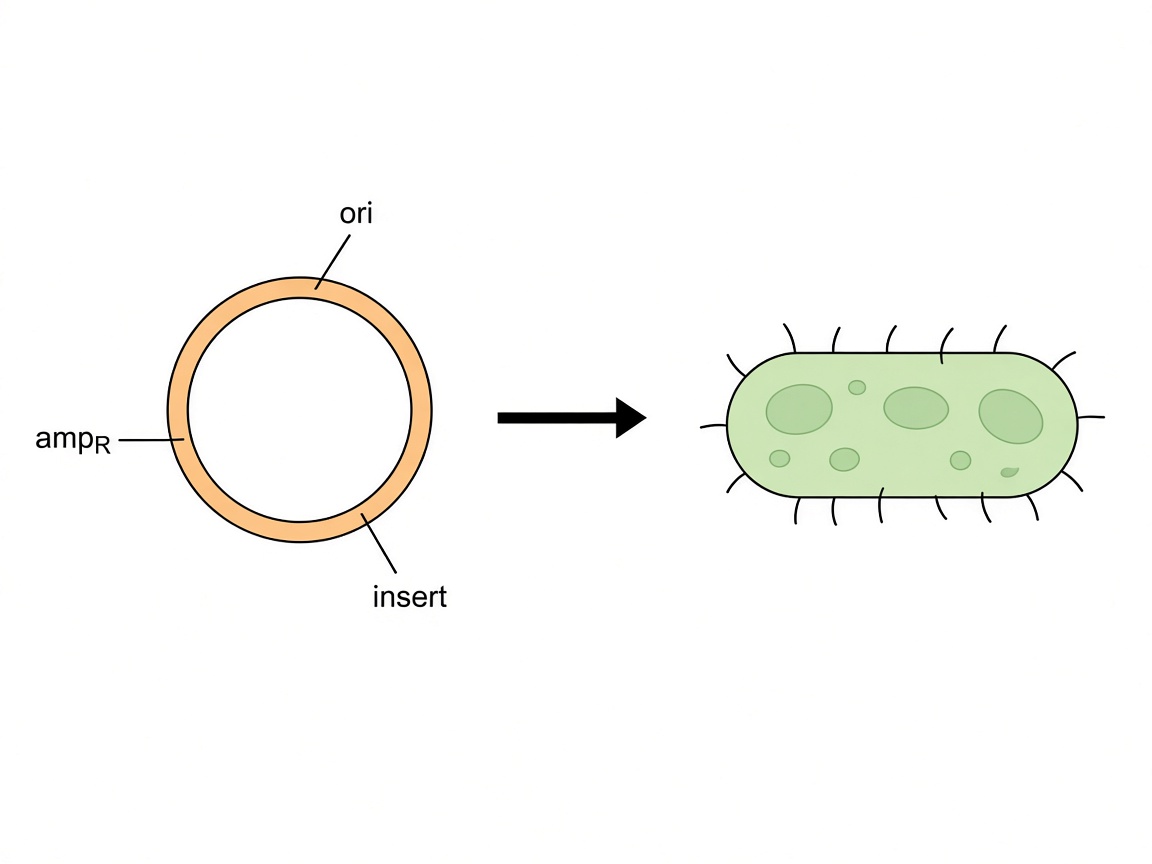
After transformation with a recombinant plasmid, bacteria that grow on antibiotic medium
  1. A. cannot contain ori sequences
  2. B. are enriched for cells that received a plasmid carrying resistance
  3. C. prove sequencing failed
  4. D. must lack all foreign DNA

Question 5 of 10

Plasmid map with ori, ampR, insert.

The ori region is important because

  1. A. it stains gel bands
  2. B. it is a type of exon
  3. C. it allows the plasmid to replicate in the host
  4. D. it encodes the insert protein only

Question 6 of 10

Forensic identification can use

  1. A. only operon diagrams
  2. B. only chromosome counts from plants
  3. C. only blood type with no DNA
  4. D. DNA analysis comparing patterns/sequences among samples

Question 7 of 10

Transgenic organisms illustrate

  1. A. genetic engineering that introduces DNA across species/lineages
  2. B. that DNA cannot be manipulated
  3. C. that PCR is impossible
  4. D. that gels separate proteins only

Question 8 of 10

Denaturation in PCR

  1. A. methylates cellulose
  2. B. separates DNA strands with heat
  3. C. joins Okazaki fragments
  4. D. translates mRNA

Question 9 of 10

Extension in PCR relies on

  1. A. reverse transcriptase in all bacterial PCR
  2. B. ribosomes reading DNA
  3. C. DNA polymerase synthesizing new DNA from primers
  4. D. helicase alone without nucleotides

Question 10 of 10

A DNA fingerprint is typically

  1. A. a karyotype of RNA
  2. B. a protein gel of histones only
  3. C. an operon map of E. coli only
  4. D. a pattern allowing comparison of DNA from various samples