Environmental Effects on Phenotype MCQ Practice

Question 1 of 10

If two cuttings from one plant show different leaf thickness in sun versus shade, the observation best supports

  1. A. phenotypic plasticity
  2. B. that the cuttings have unrelated genomes
  3. C. Y-linked leaf inheritance
  4. D. nondisjunction of leaf organelles each day
Question 2 of 10

Nutrition influencing adult body mass for a given polygenic background is an example of

  1. A. environment being irrelevant to phenotype.
  2. B. phenotype being identical for all genotypes always.
  3. C. environmental effects on phenotype.
  4. D. map-unit calculation between calories.

Question 3 of 10

The melanin–UV graph for matched fish supports which claim?

Melanin index versus weekly UV dose for genetically matched fish.
  1. A. UV dose changes fish from diploid to haploid.
  2. B. Melanin phenotype increases with UV dose while genotype is controlled.
  3. C. Melanin index is constant across environments.
  4. D. UV is a nuclear allele on chromosome 1.

Question 4 of 10

Flower color changing with soil pH for one genotype indicates that

  1. A. Mendel’s law of segregation is false in all cases.
  2. B. the genotype must differ between blue and pink flowers on the same plant.
  3. C. only mitochondrial genes encode flower color.
  4. D. environment can modify the expression of a trait.

Question 5 of 10

Which conclusion is NOT justified by phenotypic plasticity alone?

  1. A. The organism’s DNA sequence must have mutated in every cell when the phenotype changed.
  2. B. Gene expression can respond to environmental cues.
  3. C. Identical twins can differ if raised in different environments.
  4. D. Lab conditions can alter measured traits for a fixed strain.

Question 6 of 10

A yeast cell produces mating pheromone only when the opposite mating type is nearby. The nearby cell is acting as

  1. A. a Punnett square.
  2. B. an environmental/social cue affecting phenotype.
  3. C. a chloroplast donor required for meiosis I.
  4. D. proof that genotype never matters.

Question 7 of 10

Researchers raise genetically identical lizards at 25°C and 32°C and record sex ratios. A large difference in sex ratio between treatments most directly supports

Incubation temperature Percent XY-like phenotype
25°C 48
32°C 12
  1. A. independent assortment of temperature.
  2. B. that sex is determined only after fertilization by mitochondrial DNA.
  3. C. temperature-dependent effects on sex phenotype (plasticity/environmental sex determination).
  4. D. that meiosis failed in both treatments equally.

Question 8 of 10

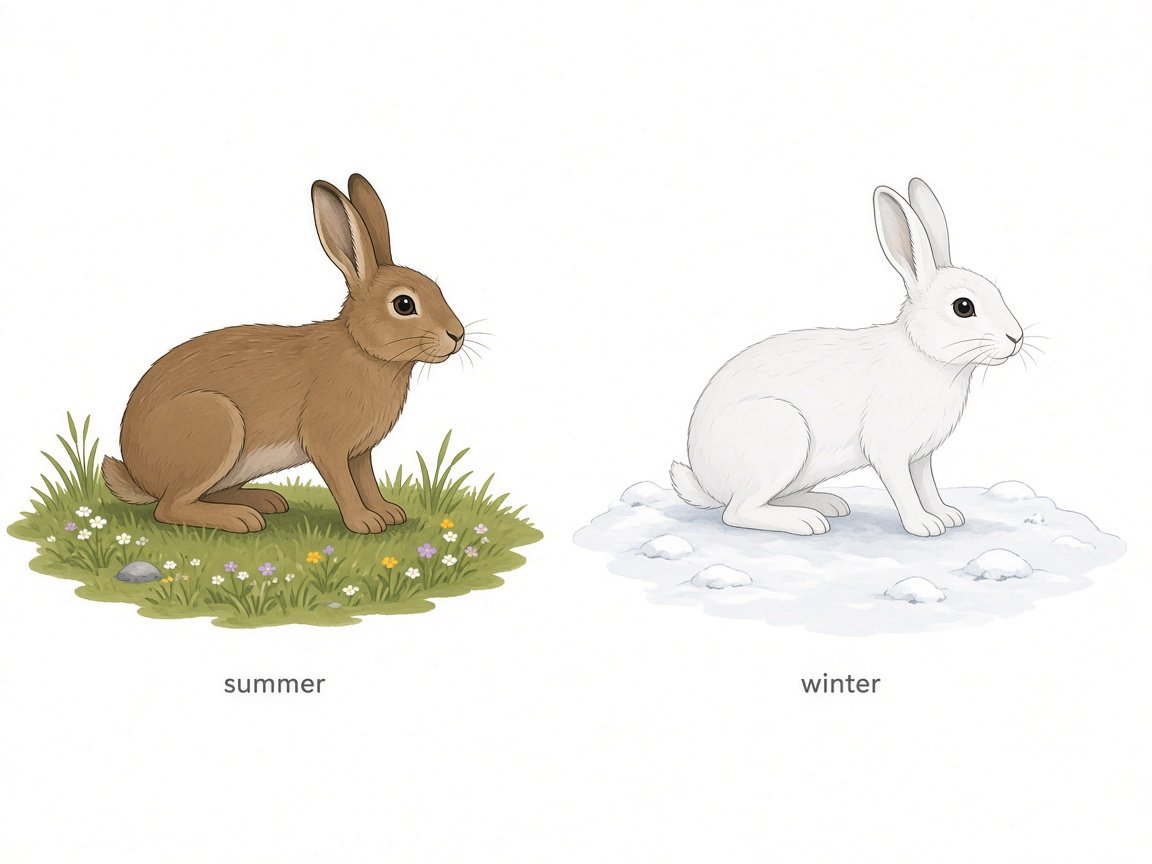
Seasonal camouflage that switches coat color without requiring a new genotype each season is

Summer and winter coats for one arctic mammal genotype.
  1. A. beneficial plasticity in a changing environment.
  2. B. evidence that chromosomes disappear in winter.
  3. C. identical to nondisjunction.
  4. D. a form of fertilization.

Question 9 of 10

To claim that soil pH—not hidden genetic differences—causes hydrangea color change, a researcher should

  1. A. use a different species in each pot.
  2. B. propagate clones (or otherwise control genotype) across pH treatments.
  3. C. avoid measuring color at all.
  4. D. only sequence Y chromosomes.

Question 10 of 10

Environmental effects on phenotype imply that

  1. A. genotype is irrelevant to all traits.
  2. B. Punnett squares predict environment with certainty.
  3. C. meiosis never occurs in eukaryotes.
  4. D. phenotype is a product of genotype and environment.