Environmental Effects on Phenotype FRQ Practice

Responses receive AI feedback against a rubric after submission. Scores are practice estimates.

Question 1 of 5

Arctic hares of one genotype are shown in summer and winter coats. (a) Define phenotypic plasticity in this context. (b) Identify the environmental factor most likely associated with the seasonal change. (c) Explain why allele frequencies in the population need not change for individuals to change coat color seasonally.
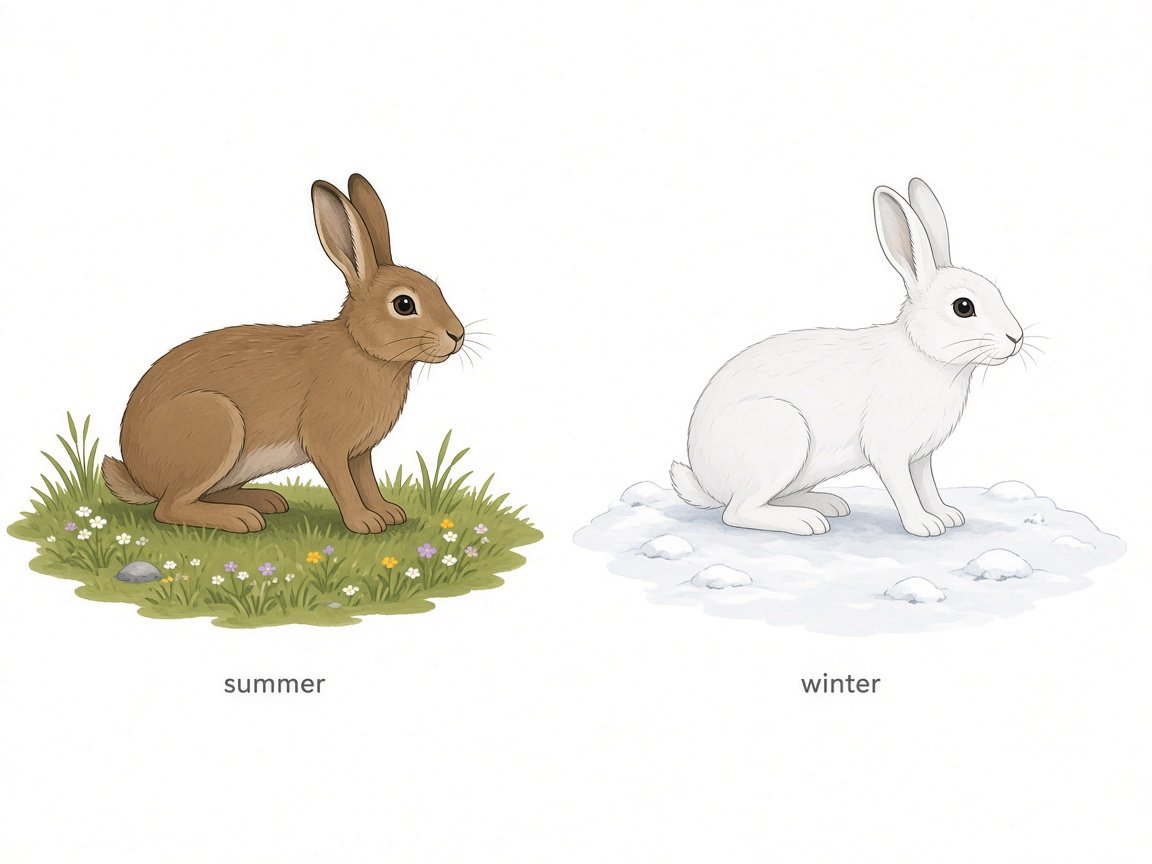
Seasonal fur phenotypes for one genotype.

Question 2 of 5

Using the soil pH–hue graph for one hydrangea genotype: (a) Describe the relationship between soil pH and hue score. (b) Explain how this supports phenotypic plasticity. (c) Predict the hue outcome if cuttings of the same plant are moved from pH 5 to pH 7.

Flower hue score versus soil pH for clones of one hydrangea genotype.

Question 3 of 5

Design a brief experiment on UV and melanin. (a) State a testable question. (b) Identify the independent and dependent variables. (c) Explain why using genetically matched organisms strengthens the claim of plasticity.

Question 4 of 5

Temperature-dependent sex determination in a reptile population: (a) Explain how nest temperature can influence offspring sex phenotype. (b) Contrast this with XX/XY chromosomal sex determination that is largely temperature-independent. (c) Discuss one ecological implication if climate warming shifts nest temperatures.

Question 5 of 5

The table compares Clone A in two environments. (a) Calculate the percent change in mean phenotype score from low to high UV. (b) Explain whether the result indicates plasticity. (c) Identify one limitation if only three organisms were measured per group.

Group Genotype Environment Mean phenotype score
1 Clone A Low UV 2.1
2 Clone A High UV 6.4