Question 1 of 10
Crossing over between non-sister chromatids occurs during
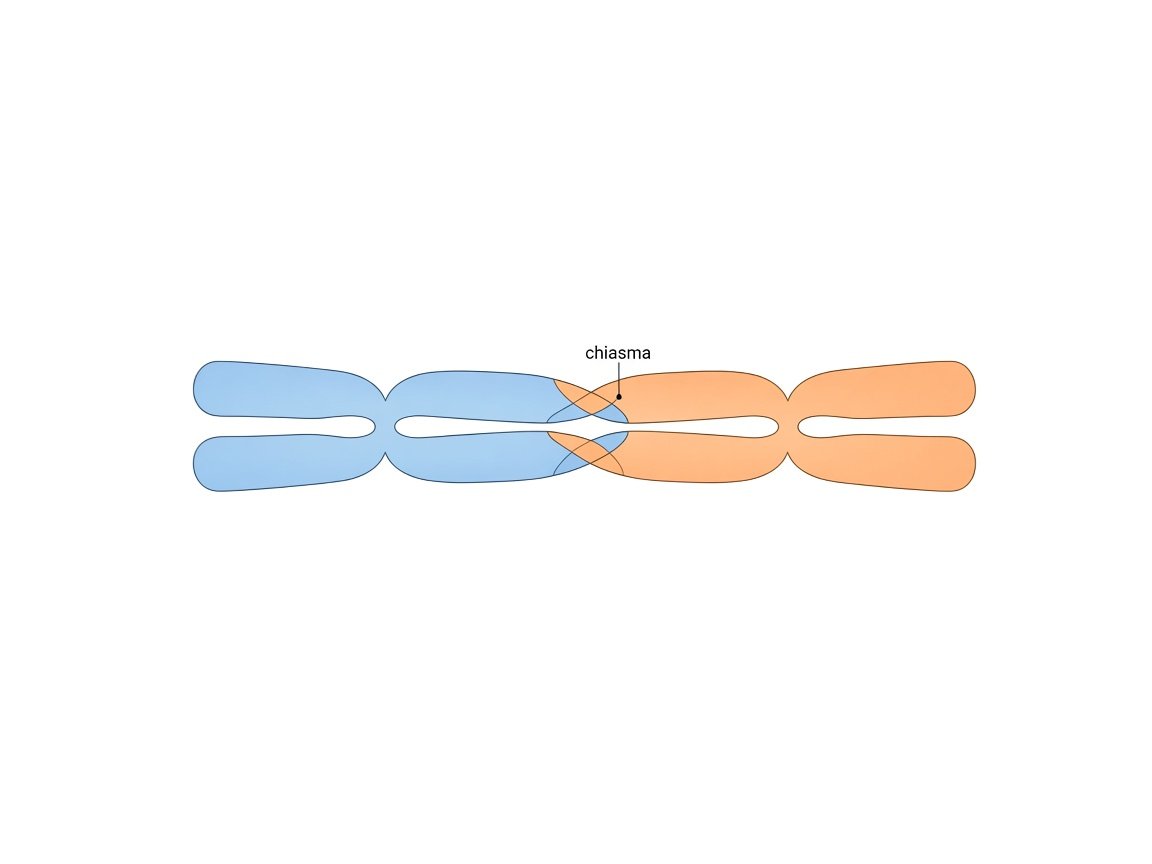
- A. anaphase II
- B. prophase I
- C. metaphase II
- D. telophase II
Crossing over between non-sister chromatids occurs during
Independent assortment increases genetic diversity because
Nondisjunction of a chromosome pair in meiosis I produces gametes that
Which process contributes to genetic variation among offspring but occurs after meiosis is complete?
For an organism with $n=3$, ignoring crossing over, how many different chromosome combinations are possible in gametes from independent assortment alone?
A tetrad shows a chiasma. What does the chiasma indicate?
A researcher compares two meiocytes. Cell P has normal crossing over; cell Q has a mutation that prevents chiasma formation but still separates homologs. Which prediction is best?
Correct separation of homologs in meiosis I and of sister chromatids in meiosis II ensures each gamete receives
The table lists mechanisms. Which row correctly matches a mechanism to when it acts?
| Mechanism | Primary timing |
|---|---|
| Crossing over | Prophase I |
| Independent assortment | ? |
| Fertilization | After gamete formation |
Sexual reproduction in eukaryotes increases genetic variation through all of the following EXCEPT