Regulation of Cell Cycle MCQ Practice

Question 1 of 10

Scenario A. Progression through the cell cycle is regulated by
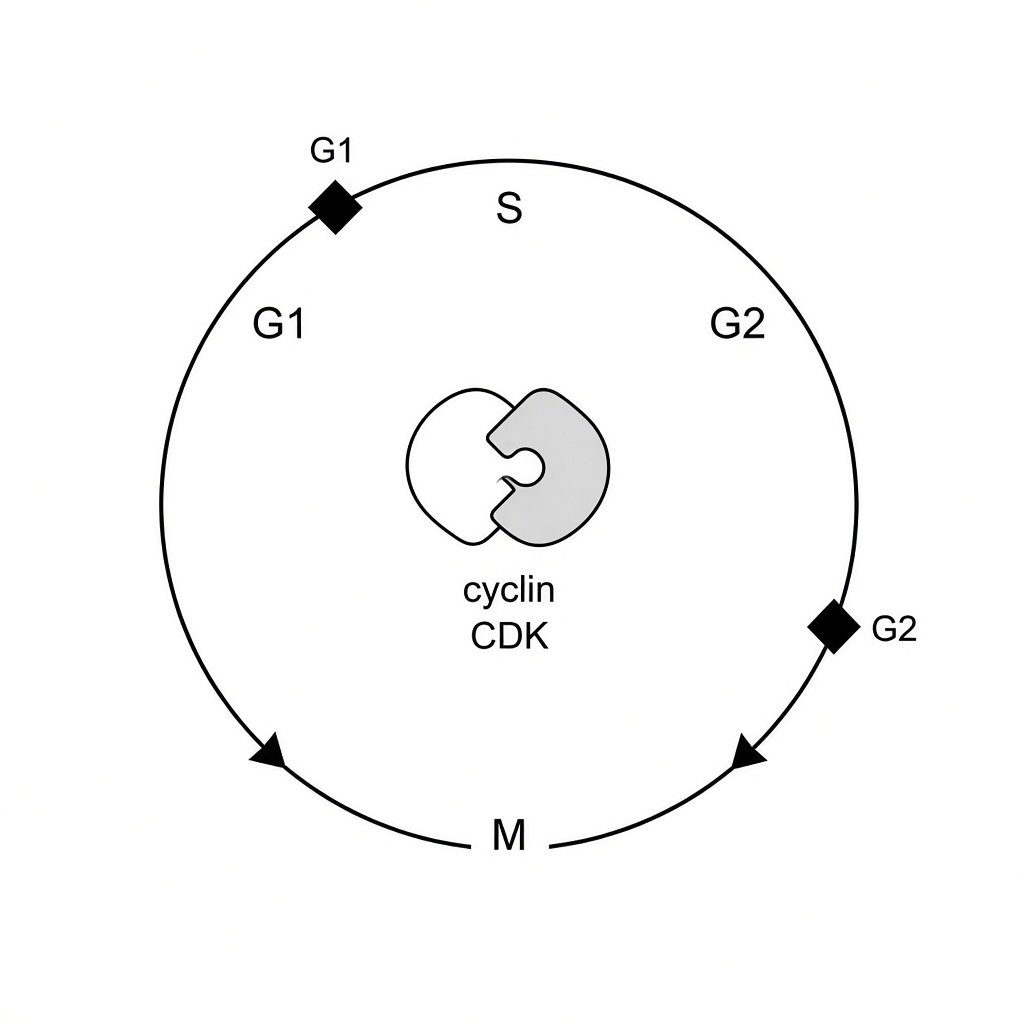
Cell cycle with checkpoint marks and cyclin–CDK interaction labeled generally.
  1. A. random uncontrolled timing only
  2. B. internal controls or checkpoints
  3. C. elimination of all cyclins before birth of the organism
  4. D. feedback that only controls blood glucose

Question 2 of 10

Scenario A. Interactions between cyclins and cyclin-dependent kinases (CDKs)

  1. A. have no role in cell-cycle control
  2. B. only replicate DNA in bacteria
  3. C. control the cell cycle
  4. D. are identical to ligand-gated ion channels

Question 3 of 10

Scenario A. Checkpoints are best described as

  1. A. control points that can halt or allow progression depending on internal conditions
  2. B. locations where chromosomes are destroyed intentionally each G1
  3. C. hormones that travel only through plant xylem
  4. D. positive-feedback loops that always amplify glucose

Question 4 of 10

Scenario A. Which statement stays within AP Biology scope regarding cyclin–CDK control?

  1. A. Students must memorize every numbered cyclin–CDK pair and each growth factor name
  2. B. Cyclins and CDKs never interact
  3. C. Only one protein in the entire cell ever regulates division
  4. D. Cyclin–CDK interactions control the cycle; naming specific pairs or growth factors is beyond exam scope

Question 5 of 10

Scenario A. A functional G1 checkpoint is most useful because it can

  1. A. force anaphase before DNA is replicated
  2. B. prevent progression into S when conditions are unsuitable
  3. C. delete the need for mitosis in eukaryotes
  4. D. convert CDKs into neurotransmitters

Question 6 of 10

Scenario A. The table lists cycle events. Which row correctly pairs a control idea with its role?

Control feature Role
Checkpoint Allow or halt progression
Cyclin–CDK interaction Control cycle timing/progression
  1. A. Checkpoint — randomly shuffles chromosomes each minute
  2. B. Cyclin–CDK — builds the cell plate in animals only
  3. C. Checkpoint — regulates whether the cell proceeds to the next stage
  4. D. CDK alone without cyclin — is the only molecule AP requires students to name as a specific pair

Question 7 of 10

Scenario A. Disruptions to the cell cycle may result in

  1. A. cancer or apoptosis
  2. B. perfect homeostasis with no possible disease
  3. C. instant conversion of all cells to gametes
  4. D. removal of all checkpoints as a healthy default

Question 8 of 10

Scenario A. Uncontrolled passage through checkpoints is most closely associated with

  1. A. healthy permanent G0 in all tissues
  2. B. improved negative feedback of glucose only
  3. C. mandatory apoptosis of every neighboring cell
  4. D. cancerous proliferation risk when division controls fail

Question 9 of 10

Scenario A. If damaged DNA is detected and the cell triggers programmed death, the outcome is

  1. A. metastasis by definition
  2. B. apoptosis
  3. C. S-phase amplification of the damage without response
  4. D. positive feedback of ethylene in fruit only

Question 10 of 10

Scenario A. A mutation disables a checkpoint that normally blocks division after severe DNA damage. The most likely organismal concern is

  1. A. improved genome fidelity in daughters
  2. B. no change because checkpoints are optional decorations
  3. C. propagation of damaged genomes and elevated cancer risk
  4. D. immediate conversion of mitosis into negative feedback