Regulation of Cell Cycle FRQ Practice

Responses receive AI feedback against a rubric after submission. Scores are practice estimates.

Question 1 of 5

Scenario A. (a) Describe the role of checkpoints in the cell cycle. (b) State how cyclins and CDKs relate to cycle control without naming specific pairs. (c) Explain why AP Biology does not require memorizing specific cyclin–CDK pairs.
Question 2 of 5

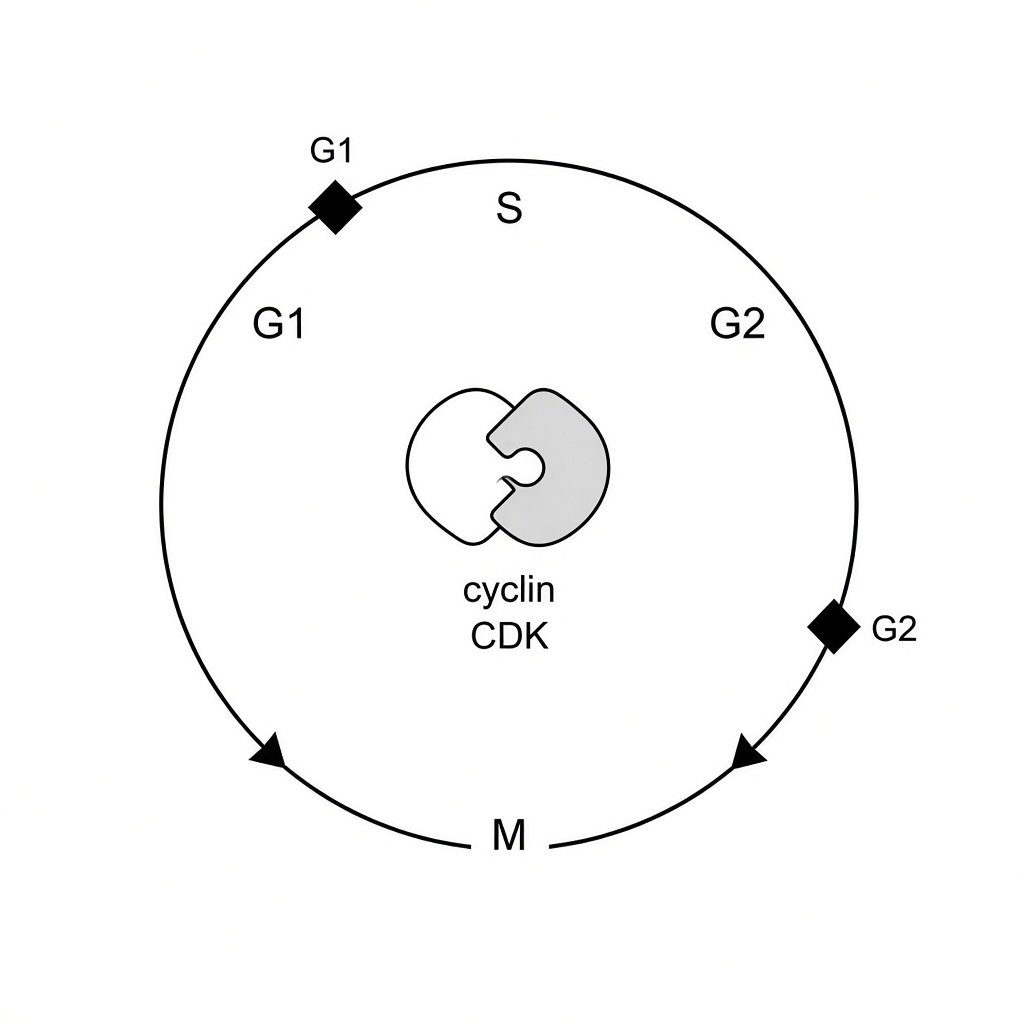
Scenario A. Use the checkpoint figure. (a) Identify two places where progression may be controlled. (b) Explain what “control” means for a cell that fails a checkpoint requirement. (c) Relate cyclin–CDK activity conceptually to passing a checkpoint.

Cell cycle with G1 and G2 checkpoint symbols and general cyclin–CDK labels.

Question 3 of 5

Scenario A. (a) Argue why unregulated cyclin–CDK activity could be dangerous. (b) Argue why permanently inactive cyclin–CDK activity could also be problematic for a tissue that must renew. (c) Connect both arguments to the need for checkpoints.

Question 4 of 5

Scenario A. (a) State two possible outcomes of cell-cycle disruption. (b) Explain how cancer relates to failed division control. (c) Explain how apoptosis can protect the organism when damage is detected.

Question 5 of 5

Scenario A. A chemical inhibits a checkpoint protein that normally blocks S phase after DNA damage. (a) Predict the effect on damaged cells’ progression. (b) Predict a long-term risk for the tissue. (c) Contrast that outcome with a pathway that instead triggers apoptosis after the same damage.