Introduction to Signal Transduction MCQ Practice

Question 1 of 10

Scenario A. A signal transduction pathway primarily links

  1. A. DNA replication directly to cytokinesis without any receptor
  2. B. mitotic spindle formation to G0 exit only
  3. C. signal reception with a cellular response
  4. D. negative feedback exclusively to positive feedback
Question 2 of 10

Scenario A. Many signal transduction pathways include protein modifications that involve

  1. A. random deletion of chromosomes
  2. B. phosphorylation cascades
  3. C. complete loss of the plasma membrane
  4. D. fusion of mitochondria into a single organelle

Question 3 of 10

Scenario A. Which sequence correctly orders the general stages of a signal transduction pathway?

  1. A. Reception → transduction → response
  2. B. Response → reception → transduction
  3. C. Cytokinesis → reception → metaphase
  4. D. Transduction → cytokinesis → reception

Question 4 of 10

Scenario A. In a phosphorylation cascade, each activated kinase typically

  1. A. destroys the original ligand so no further signaling can occur
  2. B. replicates the cell’s entire genome before the next step
  3. C. opens plasmodesmata between all neighboring tissues
  4. D. phosphorylates the next protein in the relay, helping transmit and often amplify the signal

Question 5 of 10

Scenario A. The table lists pathway events. Which event belongs to transduction rather than reception?

Event Stage
Ligand binds receptor Reception
Kinase cascade Transduction
Change in gene expression Response
  1. A. A ligand binds a specific extracellular domain of a membrane receptor
  2. B. A series of kinases phosphorylate successive target proteins inside the cell
  3. C. A steroid hormone diffuses to an intracellular receptor
  4. D. A peptide ligand docks in a receptor’s binding pocket

Question 6 of 10

Scenario A. Why can phosphorylation cascades amplify a weak external signal?

  1. A. Each kinase molecule is permanently destroyed after one reaction, reducing noise
  2. B. Phosphate groups remove all receptors from the membrane before amplification
  3. C. One activated enzyme can modify many downstream molecules, increasing the number of active intermediates
  4. D. Amplification occurs only when mitosis is blocked at metaphase

Question 7 of 10

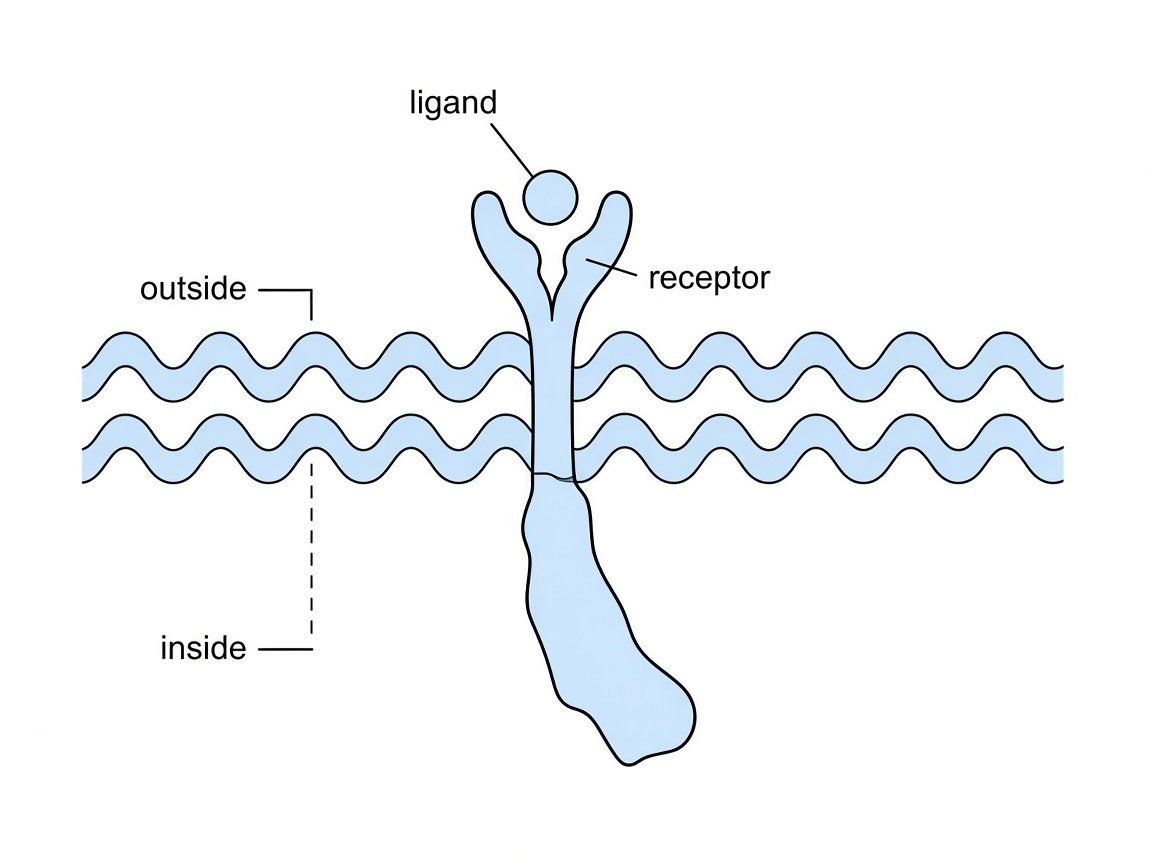
Scenario A. Signaling begins when a ligand is recognized by a receptor. The ligand-binding domain

Ligand bound to a membrane receptor spanning the plasma membrane.
  1. A. recognizes a specific chemical messenger such as a peptide or small molecule
  2. B. randomly binds every molecule in the extracellular fluid with equal affinity
  3. C. functions only after the cell has entered anaphase
  4. D. is identical for every receptor type in all eukaryotes

Question 8 of 10

Scenario A. After ligand binding, the intracellular domain of a receptor often

  1. A. immediately leaves the cell as a free hormone
  2. B. replicates DNA during G1
  3. C. fuses with a neighboring cell’s nucleus
  4. D. changes shape, initiating transduction of the signal

Question 9 of 10

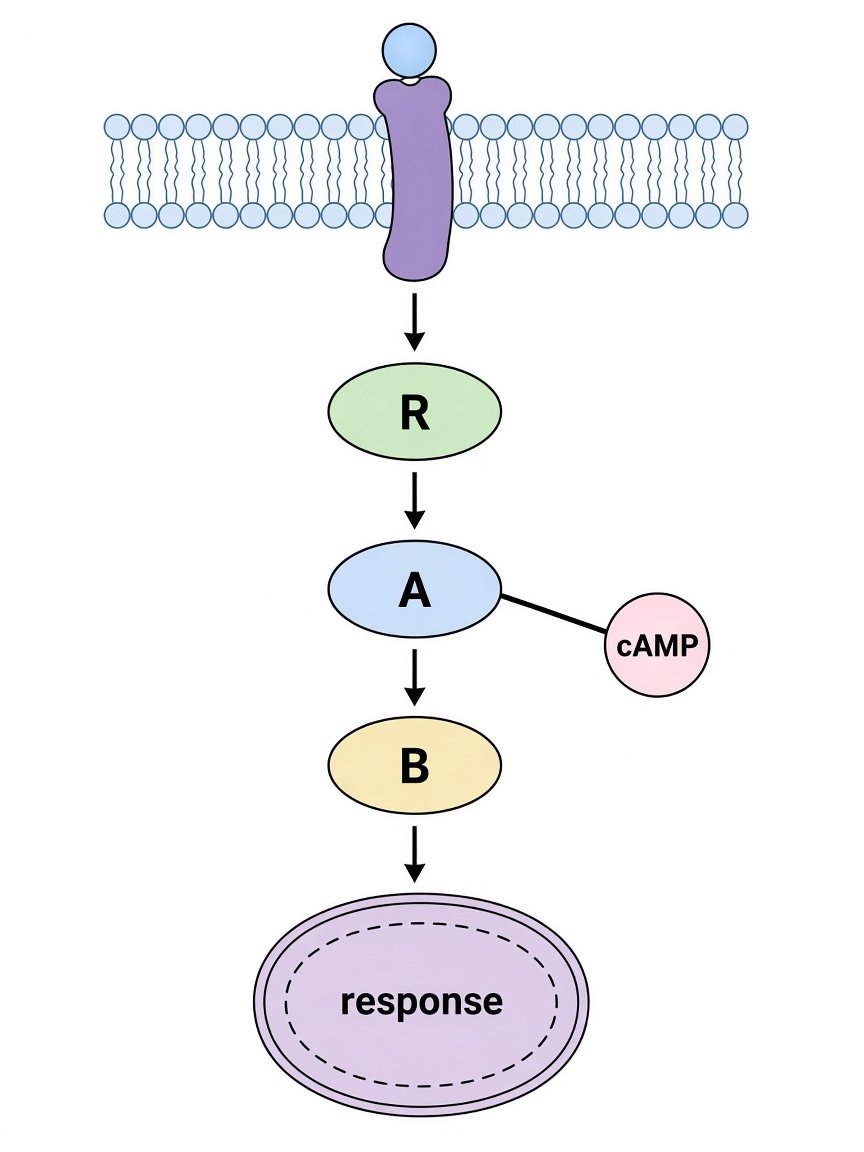
Scenario A. Second messengers such as cyclic AMP (cAMP) function to

Membrane receptor feeding a cascade with a cAMP second messenger leading to a cellular response.
  1. A. replace the need for any receptor protein
  2. B. relay and amplify the intracellular signal after reception
  3. C. carry chromosomes to opposite poles in anaphase
  4. D. form the cell plate during plant cytokinesis

Question 10 of 10

Scenario A. Binding of a ligand to a ligand-gated channel can

  1. A. only permanently destroy the channel protein
  2. B. force the cell into G0 with no other possible outcomes
  3. C. cause the channel to open or close, altering ion flow
  4. D. convert the channel into a cyclin-dependent kinase