Energy Flow Through Ecosystems MCQ Practice

Question 1 of 10

A mammal shivering in the cold is primarily demonstrating

  1. A. ectothermic reliance on only external heat sources
  2. B. endothermic use of metabolic energy to maintain temperature
  3. C. a switch to chemosynthesis
  4. D. matter cycling without energy use

Question 2 of 10

Seasonal breeding timed to peak food availability is best described as

  1. A. a reproductive strategy responsive to energy availability
  2. B. proof that energy never limits reproduction
  3. C. a density-independent mutation rate
  4. D. biomagnification of pesticides

Question 3 of 10

If an organism's energy expenditure permanently exceeds intake, the long-term expectation is

  1. A. unlimited growth
  2. B. immediate conversion to an autotroph
  3. C. increased carrying capacity of the habitat
  4. D. loss of mass, reduced reproduction, and potentially death

Question 4 of 10

Phosphate enters soils largely by weathering of rocks and returns via

  1. A. photosynthesis alone
  2. B. nitrogen fixation alone
  3. C. decomposition and excretion
  4. D. ozone formation

Question 5 of 10

Ecological levels from least to most inclusive among these options are

  1. A. biome, ecosystem, community, population
  2. B. population, community, ecosystem, biome
  3. C. community, population, biome, ecosystem
  4. D. ecosystem, population, biome, community

Question 6 of 10

Combustion of fossil fuels most directly increases atmospheric carbon by

  1. A. releasing $\mathrm{CO_2}$ from stored organic carbon
  2. B. fixing $\mathrm{N_2}$ into amino acids
  3. C. precipitating liquid water from vapor
  4. D. weathering phosphate rock into nitrate

Question 7 of 10

If primary productivity doubles while consumer efficiency stays similar, a reasonable short-term expectation is

  1. A. immediate extinction of all producers
  2. B. support for larger populations at higher trophic levels
  3. C. elimination of energy flow
  4. D. conversion of all consumers into chemosynthetic autotrophs

Question 8 of 10

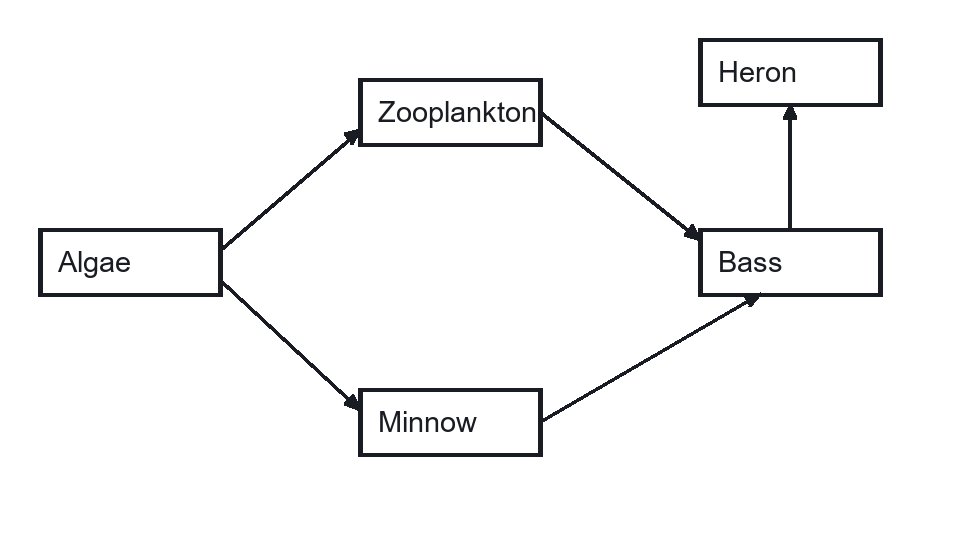
In the food web figure, removing algae would most immediately reduce energy available to

Freshwater food web with algae, zooplankton, minnow, bass, and heron; arrows point from prey to predator.
  1. A. zooplankton and minnows that consume algae
  2. B. only herons that photosynthesize
  3. C. bass that produce glucose from sunlight
  4. D. decomposers that stop existing in all ecosystems

Question 9 of 10

Photosynthetic plants contribute to primary productivity by

  1. A. consuming only tertiary consumers
  2. B. fixing nitrogen gas into phosphate
  3. C. capturing sunlight energy into organic compounds
  4. D. denitrifying ammonium to $\mathrm{N_2}$ as their main energy source

Question 10 of 10

A scavenger feeding on a carcass is acting as a

  1. A. photoautotroph
  2. B. nitrogen-fixing producer
  3. C. chemosynthetic primary producer
  4. D. heterotroph