Cell Cycle MCQ Practice

Question 1 of 10

Scenario B. Interphase consists of

  1. A. G1, S, and G2
  2. B. only prophase and anaphase
  3. C. cytokinesis alone
  4. D. apoptosis checkpoints exclusively

Question 2 of 10

Scenario B. DNA is in chromatin form and replicates during

Cell-cycle wheel showing G1, S, G2, mitosis in clockwise order and a G0 branch from G1.
  1. A. anaphase
  2. B. cytokinesis in animals only
  3. C. S phase
  4. D. metaphase alignment

Question 3 of 10

Scenario B. Nondividing cells may

  1. A. only remain forever in anaphase
  2. B. exit the cycle or be held at a particular stage, including entering G0
  3. C. replicate DNA continuously without regulation
  4. D. skip all of interphase yet complete mitosis normally every minute

Question 4 of 10

Scenario B. Which event is characteristic of G2 rather than G1?

  1. A. Primary growth with unreplicated DNA
  2. B. First duplication of organelles before any S phase
  3. C. Separation of chromatids
  4. D. Extensive ATP production and centrosome replication after DNA has already been replicated

Question 5 of 10

Scenario B. A graph of DNA content versus time in one cell cycle shows a step up during one interval. That interval is most likely

Relative DNA content versus time through one cell cycle, stepping from 1 to 2 during S.
  1. A. S phase
  2. B. cytokinesis alone without prior S
  3. C. G0 with DNA loss
  4. D. metaphase alignment without replication

Question 6 of 10

Scenario B. The cell cycle is highly regulated because it controls

  1. A. only the color of pigments in chloroplasts
  2. B. ligand specificity of GPCRs exclusively
  3. C. growth and reproduction of eukaryotic cells
  4. D. blood glucose set points alone

Question 7 of 10

Scenario B. Mitosis alternates with

  1. A. meiosis in every cycle of a somatic cell
  2. B. interphase in the cell cycle
  3. C. only apoptosis
  4. D. binary fission in all eukaryotes exclusively

Question 8 of 10

Scenario B. In prophase,

  1. A. sister chromatids condense, the spindle begins to form, and centrosomes move toward opposite poles
  2. B. chromatids are pulled to poles as in anaphase
  3. C. the cell plate finishes dividing animal cells
  4. D. DNA replicates for the first time

Question 9 of 10

Scenario B. Telophase is characterized by
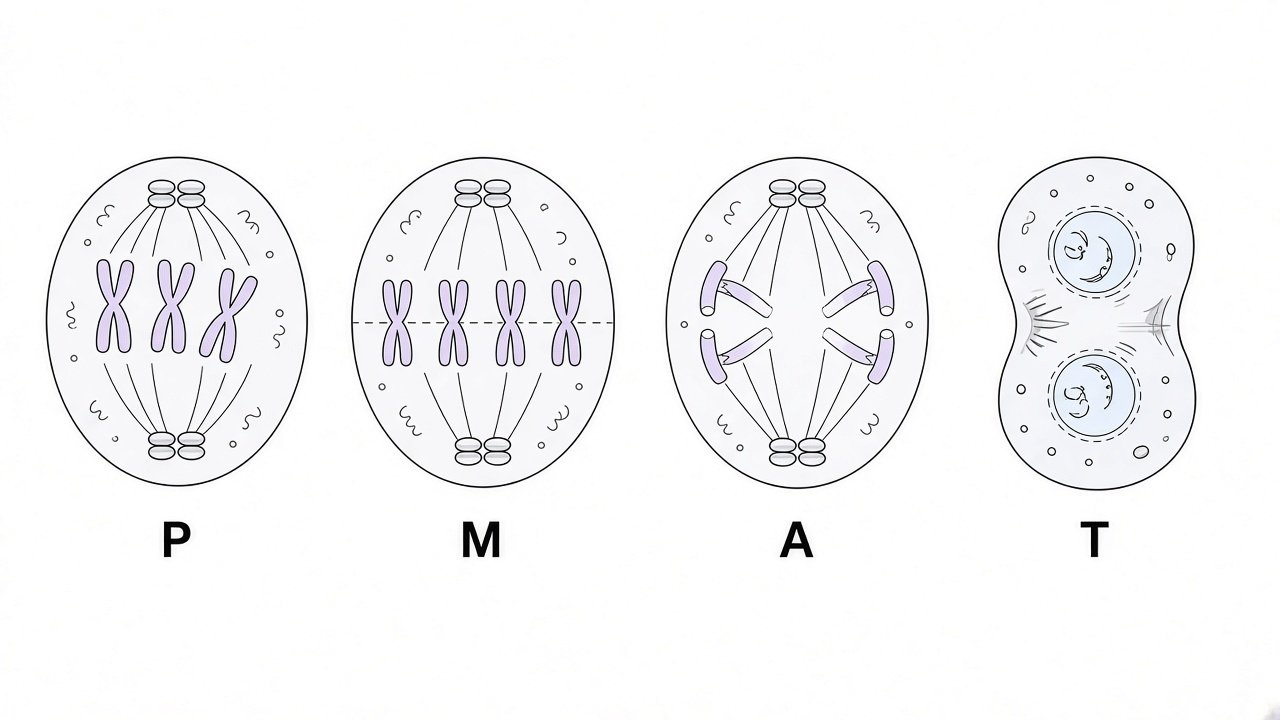
Mitosis stages including telophase with reforming nuclei.
  1. A. alignment of chromosomes at the equator
  2. B. DNA replication in chromatin form
  3. C. first appearance of sister chromatids from unreplicated DNA
  4. D. breakdown of the mitotic spindle and development of new nuclear envelopes

Question 10 of 10

Scenario B. Which statement correctly pairs a mitotic role with a stage feature?

  1. A. Growth — chromosomes fail to segregate on purpose
  2. B. Tissue repair — daughters receive incomplete random genomes
  3. C. Asexual reproduction — genetically identical daughters receive a complete genome
  4. D. Repair — cytokinesis is skipped permanently in all eukaryotes