TOPIC 7.3 · STUDY
Artificial Selection
Artificial selection is differential reproduction imposed by humans on heritable phenotypes they prefer. It changes allele frequencies and can increase or reduce variation in other species. Humans, rather than the surrounding environment, decide which individuals breed.
7.3.A
How humans change variation
Through artificial selection, humans affect variation in other species. People choose parents with a desired phenotype, such as larger fruit or denser hair, and keep other individuals from reproducing. If the trait is heritable, alleles associated with it increase, and the mean of the trait shifts across generations.
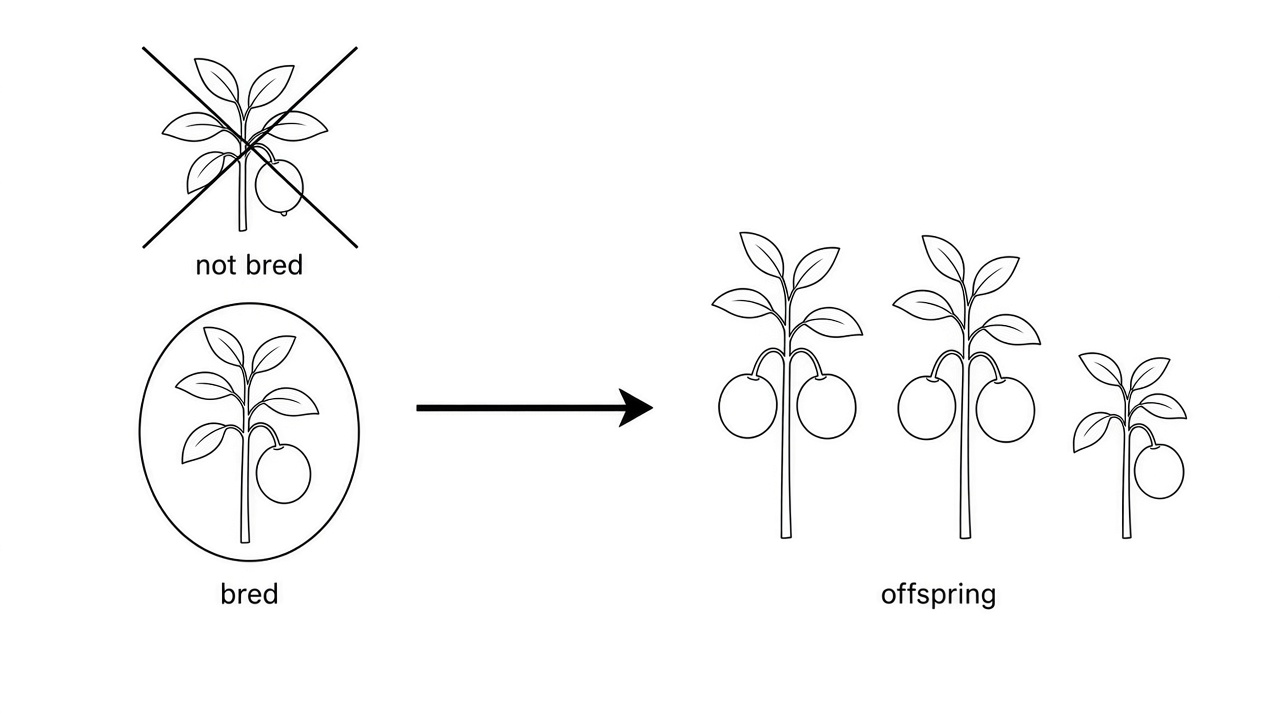
Only the chosen phenotype contributes offspring, so the favored trait becomes more common when it is heritable.
The same process can produce divergent domesticated forms when different people select different traits from standing variation. A narrow preference for a few parents concentrates ancestry. Relatedness rises, deleterious alleles can become common, and genetic diversity falls. Selecting one trait can also shift correlated traits that the breeder did not intend to change.
Human harvest can act as artificial selection even without a planned breeding program. If large fish are removed before they reproduce, heritable life-history phenotypes that mature smaller or earlier can increase. That is still human-caused differential reproductive success. Evolution here means a change in the genetic makeup of the population, and artificial selection is one human-driven way that change happens.
| Comparison | What sets reproduction | What changes |
|---|---|---|
| Artificial selection | Humans choose which phenotypes breed | Allele frequencies of preferred heritable traits |
| Natural selection | Environmental conditions set reproductive success | Allele frequencies of phenotypes with higher fitness |
Key points
- Humans change variation in other species by choosing which individuals reproduce.
- The trait must be heritable for the population mean to shift.
- Consistent choice usually moves the targeted trait in one direction.
- Breeding from few parents can reduce diversity and concentrate deleterious alleles.
- Selection on one trait can change correlated traits.
- Both artificial and natural selection require heritable phenotypic variation.
One generation of choice does not create the alleles. It changes how common they are.