Artificial Selection MCQ Practice

Question 1 of 10

Scenario A. Artificial selection differs from natural selection mainly because in artificial selection

  1. A. heritability is not required.
  2. B. phenotypic variation is irrelevant.
  3. C. humans choose which individuals reproduce based on preferred traits.
  4. D. allele frequencies cannot change.

Question 2 of 10

Scenario A. Breeders repeatedly choose maize plants with larger fruit for seed. Over generations, mean fruit mass increases. This outcome occurs because

Generation Mean fruit mass (g)
0 42
5 61
10 88
  1. A. humans altered which phenotypes contributed genes to the next generation.
  2. B. fruit mass increased in each plant during its lifetime and was inherited as an acquired trait.
  3. C. mutation rate fell to zero.
  4. D. selection cannot change quantitative traits.

Question 3 of 10

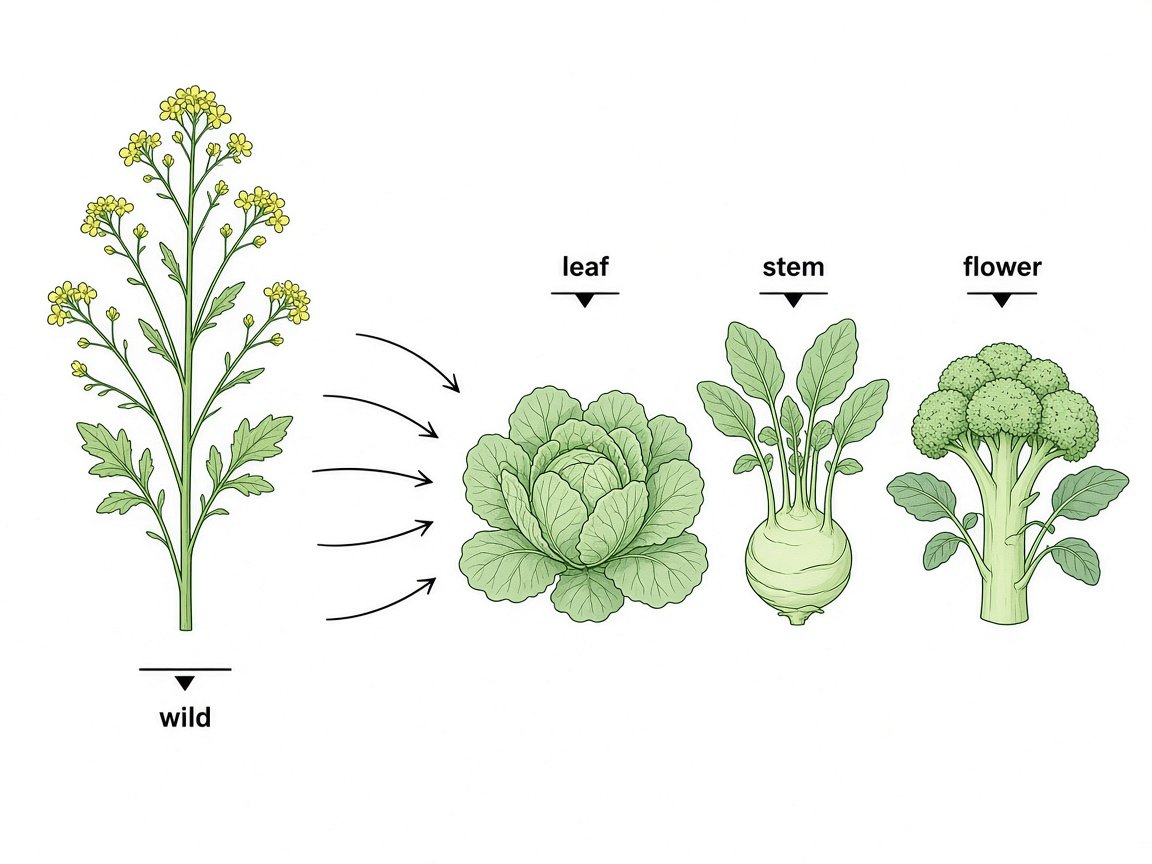
Scenario A. Wild mustard populations contain heritable variation in leaf, stem, and flower traits. Humans selecting different organs produced distinct crop forms. This illustrates that

Wild plant and cultivated leaf, stem, and flower forms.
  1. A. humans create new alleles by wishing for traits.
  2. B. human choices among existing variation can change diversity patterns within a species lineage.
  3. C. artificial selection only works on animals.
  4. D. crop diversity cannot arise from selection.

Question 4 of 10

Scenario A. A kennel breeds only the calmest dogs each generation. Which claim is most accurate?

  1. A. Calmness cannot have a genetic component if training exists.
  2. B. Allele frequencies for behavior-related loci must remain unchanged.
  3. C. Artificial selection requires eliminating all genetic variation first.
  4. D. If calmness is partly heritable, alleles associated with calmer behavior should increase.

Question 5 of 10

Scenario A. Compared with an unharvested fish population, intense harvest of the largest individuals each year is a form of artificial selection that can

  1. A. favor alleles associated with slower growth or earlier maturation if those phenotypes reproduce before harvest.
  2. B. have no evolutionary effect because fishing is not natural.
  3. C. increase only body size alleles.
  4. D. stop mutation.

Question 6 of 10

Scenario A. Which data pattern best supports that artificial selection changed a livestock population?

  1. A. Identical mean phenotype before and after many generations of selective breeding.
  2. B. Directional change in the selected trait mean across generations under a consistent breeder criterion.
  3. C. Random fluctuation with no association to which parents were chosen.
  4. D. Change only in traits breeders never measured or selected.

Question 7 of 10

Scenario A. Gardeners save seed only from maize plants with the highest lycopene content. Molecular assays later show allele-frequency shifts at pigment pathway loci. The shifts are evidence that

  1. A. humans cannot affect genetic diversity.
  2. B. lycopene is environmentally fixed with no genetic basis.
  3. C. human selection on a phenotype changed the population’s genetic makeup.
  4. D. only natural predators can change allele frequencies.

Question 8 of 10

Scenario A. Artificial selection can reduce genetic diversity within a breed when

  1. A. few preferred individuals contribute most offspring for many generations.
  2. B. breeders maximize outcrossing to unrelated lines every generation.
  3. C. no traits are preferred.
  4. D. mutation introduces unlimited unique alleles each generation and all are retained equally.

Question 9 of 10

Scenario A. A student claims artificial selection is not evolution because “humans are involved.” The best response is that

  1. A. evolution requires the absence of humans by definition.
  2. B. allele frequencies never change under breeding.
  3. C. only natural selection counts as evolution.
  4. D. evolution is change in a population’s genetic makeup over time, which selective breeding can produce.

Question 10 of 10

Scenario A. Which practice is an example of humans affecting diversity within a plant population?

  1. A. Ignoring phenotype and allowing random mating with no harvest.
  2. B. Roguing (removing) late-flowering plants before they set seed in a seed-production field.
  3. C. Measuring rainfall without changing which plants reproduce.
  4. D. Photographing plants without collecting seed.