Photosynthesis MCQ Practice

Question 1 of 10

Stacks of thylakoids within chloroplasts are called

  1. A. cristae
  2. B. grana
  3. C. nucleoli
  4. D. centrosomes

Question 2 of 10

The fluid within the inner chloroplast membrane and outside the thylakoids is the

  1. A. matrix of the mitochondrion
  2. B. stroma
  3. C. middle lamella
  4. D. periplasm of Gram-negative bacteria only

Question 3 of 10

Photosynthesis first evolved in

  1. A. prokaryotic organisms
  2. B. mammals only
  3. C. fungi that lack chlorophyll entirely
  4. D. viruses

Question 4 of 10

Sugars produced by photosynthesis can be

  1. A. used in biological processes or stored
  2. B. only excreted as nitrogen gas
  3. C. converted exclusively into helium
  4. D. unable to enter any metabolic pathway

Question 5 of 10

Which chloroplast feature directly captures light energy via pigments?
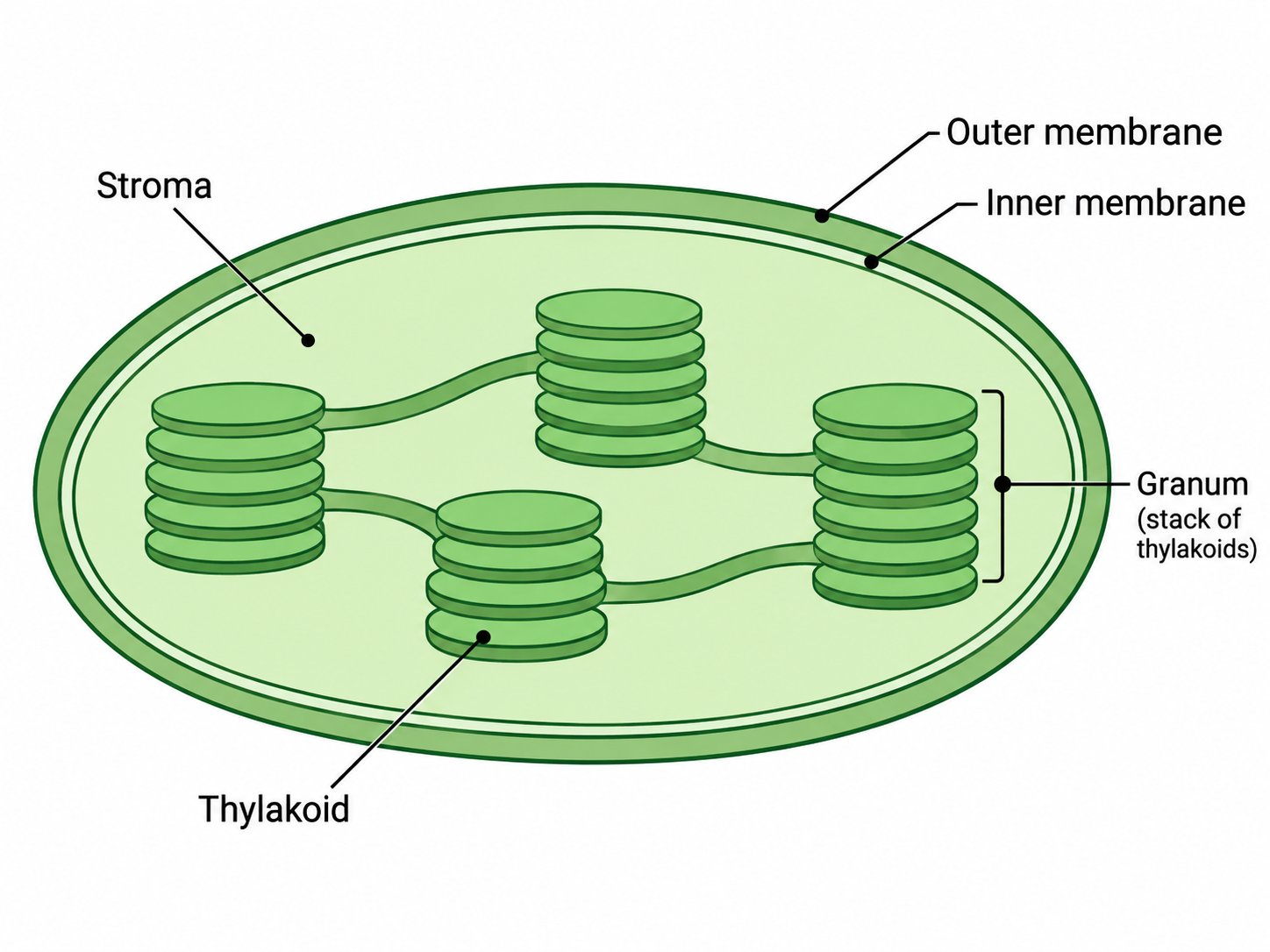
Chloroplast structure.
  1. A. Stroma enzymes of carbon fixation alone without pigments
  2. B. Chlorophyll in photosystems embedded in thylakoid membranes
  3. C. Cell wall cellulose
  4. D. Nuclear lamina

Question 6 of 10

If light reactions fail to produce ATP and NADPH, Calvin-cycle carbohydrate synthesis should

  1. A. accelerate indefinitely
  2. B. decrease because those products power carbon fixation pathways
  3. C. switch to using nuclear ATP exclusively without consequence
  4. D. require memorization of every Calvin enzyme name to continue

Question 7 of 10

ETC reactions relevant to this topic occur in chloroplasts, mitochondria, and

  1. A. across prokaryotic plasma membranes
  2. B. only in the extracellular matrix of bone
  3. C. only inside vacuoles of dead cells
  4. D. nowhere else in biology

Question 8 of 10

Photosystems I and II are connected by

  1. A. transfer of electrons through an ETC in the thylakoid membrane
  2. B. direct fusion into a single nuclear chromosome
  3. C. competitive inhibition of ATP synthase by CO2
  4. D. fermentation of ethanol in the stroma

Question 9 of 10

Chemiosmosis in chloroplasts involves protons flowing

  1. A. through ATP synthase to drive ATP formation from ADP and Pi
  2. B. randomly through cellulose without a membrane protein
  3. C. only into the nucleus to make DNA
  4. D. to reduce NADP⁺ directly without photosystems

Question 10 of 10

Energy captured in light reactions and stored in ATP and NADPH is used to

  1. A. produce carbohydrates from carbon dioxide in the Calvin cycle
  2. B. hydrolyze the thylakoid into amino acids as the main product
  3. C. replace oxygen with nitrogen in air as photosynthesis’s only goal
  4. D. denature all stromal enzymes intentionally