Lipids MCQ Practice

Question 1 of 10

An unsaturated fatty acid must contain

  1. A. at least one double bond between carbon atoms
  2. B. a full DNA codon
  3. C. only single bonds between carbon atoms
  4. D. only peptide bonds

Question 2 of 10

Structure and function of lipids derive from

  1. A. hydrogen bonding between water only
  2. B. the way their subcomponents are assembled
  3. C. translation on ribosomes into fatty acids
  4. D. base-pairing of A with T

Question 3 of 10

Hydrogenating a liquid plant oil (adding hydrogens across double bonds) is expected to

  1. A. remove all carbon atoms
  2. B. increase unsaturation and make it more liquid
  3. C. increase saturation and make the fat more solid at room temperature
  4. D. convert the oil into cellulose

Question 4 of 10

The figure shows a membrane cross-section with head groups outward and tails inward. Which lipid behavior is illustrated?
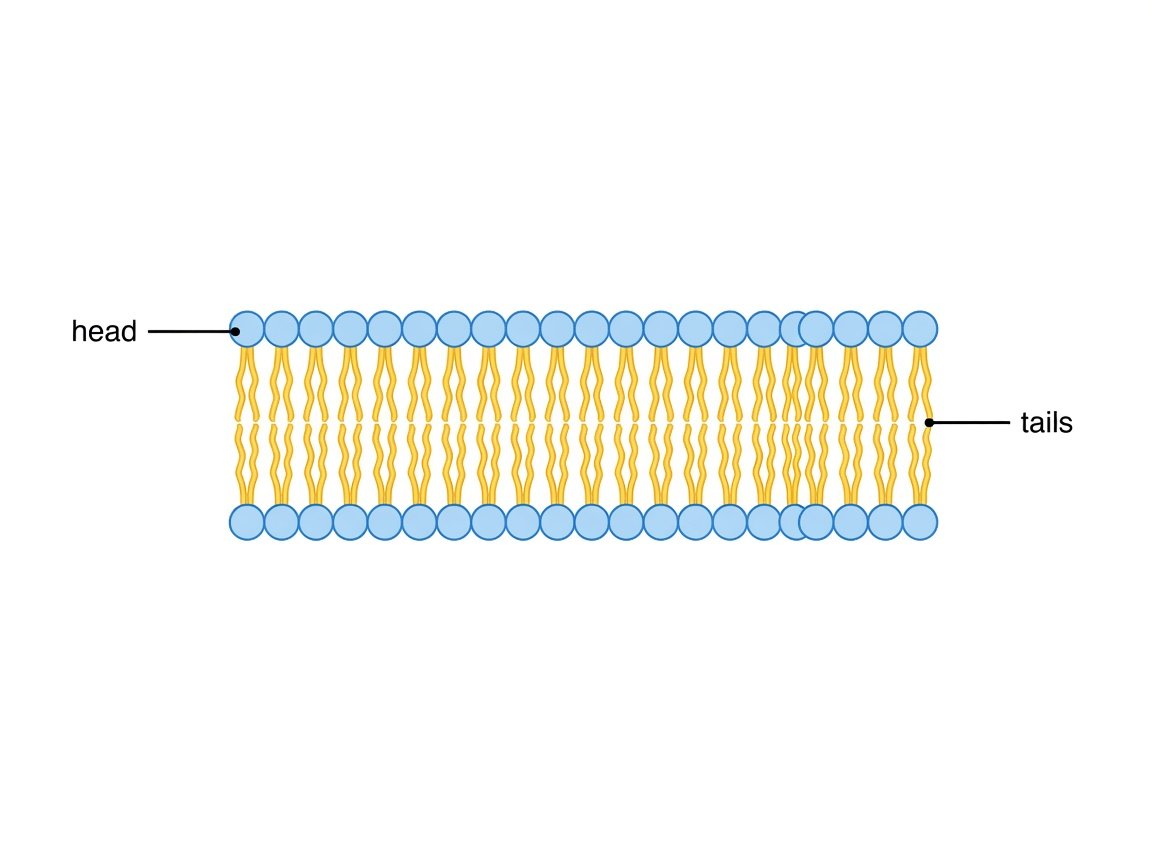
Phospholipid bilayer with hydrophilic heads out and hydrophobic tails in.
  1. A. Amino acids forming beta sheets only
  2. B. Nucleotides forming peptide bonds
  3. C. Monosaccharides forming starch
  4. D. Phospholipids assembling into a bilayer

Question 5 of 10

Which function is associated with fats in mammals according to the CED?

  1. A. Energy storage and, in some cases, insulation
  2. B. Catalyzing all cellular reactions as ribozymes only
  3. C. Forming cellulose microfibrils
  4. D. Encoding hereditary information as base sequences

Question 6 of 10

Relative membrane cholesterol content is compared across tissues.

Tissue membrane Cholesterol (relative)
A High
B Low

Based on CED function, cholesterol enrichment is most directly interpreted as contributing to

  1. A. formation of peptide bonds
  2. B. structural stability of animal cell membranes
  3. C. polymerization of glucose into starch
  4. D. storage of genetic information

Question 7 of 10

Phospholipids are important because they

  1. A. are identical to monosaccharides
  2. B. are the monomers of proteins
  3. C. form the lipid bilayers of plasma and cell membranes
  4. D. carry the genetic code in RNA

Question 8 of 10

Which statement correctly connects molecular feature to property?

  1. A. Kinks appear only in fully saturated tails
  2. B. More C=C bonds → complete saturation → always solid ice
  3. C. No double bonds → maximum unsaturation
  4. D. More C=C bonds → more unsaturation → typically more liquid at room temperature

Question 9 of 10

If cholesterol were unavailable to an animal cell membrane, which CED-stated contribution would be missing?

  1. A. Essential structural stability provided by cholesterol
  2. B. Encoding of mRNA codons by cholesterol
  3. C. Photosynthetic carbon fixation by cholesterol
  4. D. Formation of peptide bonds by cholesterol

Question 10 of 10

Steroid hormones are classified as lipids that

  1. A. store hereditary information in base pairs
  2. B. support physiological functions including growth, development, energy metabolism, and homeostasis
  3. C. are polysaccharides of ribose
  4. D. are exclusively inorganic phosphates